When standard heavy equipment such as excavator buckets are unable to penetrate very hard materials such as rock, reinforced concrete, or old asphalt, an excavator breaker is the most reliable solution in the field. This tool is often found in construction projects, mining, to demolition of buildings because of its ability to destroy solid materials quickly, precision, and is much more labor-saving than manual methods.
However, what exactly is an excavator breaker, whatever type, and how it works in the field? This article will thoroughly examine everything, starting from the definition, component, types of breakers, way of working, advantage, to tips on choosing and maintaining it so that your heavy equipment investment is truly optimal.
What is an Excavator Breaker?
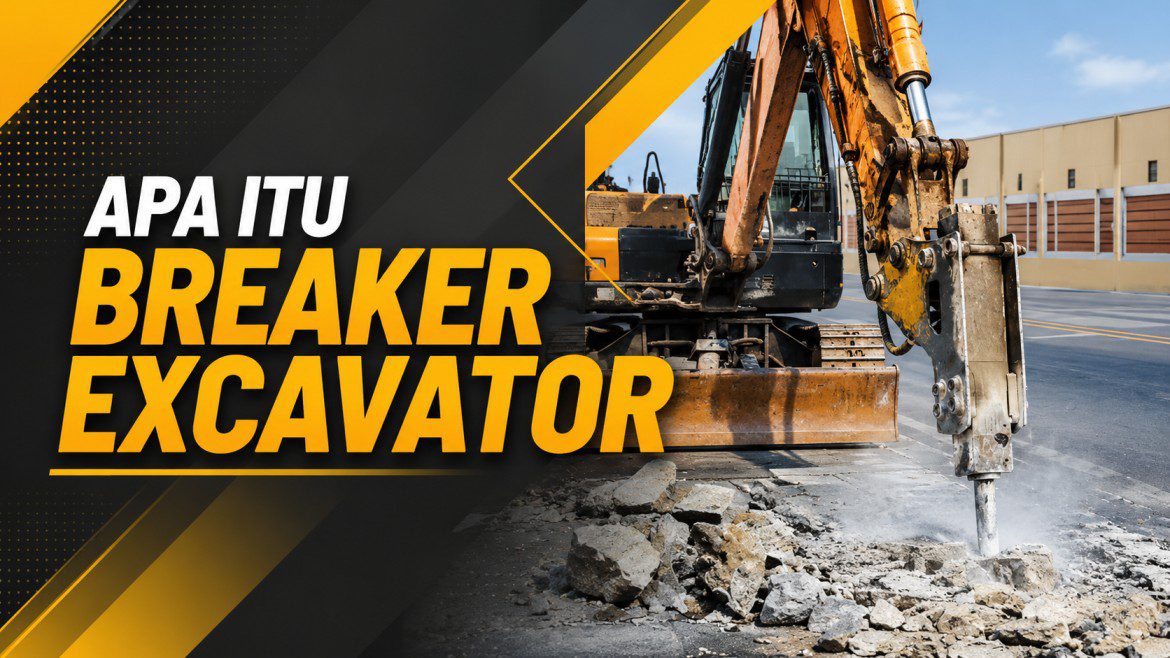
The excavator breaker is an attachment (additional tools) which is installed on the excavator arm to replace the bucket, with the main function crushing hard materials such as rocks, concrete, asphalt, and mining products. This tool is also often called a hydraulic breaker, hammer excavator, or rockbreaker, because the driving force comes from the excavator's hydraulic system itself.
Simply, Excavator breaker works like a giant hammer driven by hydraulic oil pressure. Because of its position as an attachment, one excavator unit can double function: to dig with a bucket, and to crush hard materials with a breaker, simply replace the attachment at the end of the arm. This is what makes breaker excavators one of the most flexible heavy equipment and high investment value in various types of projects.
Main Components of an Excavator Breaker
To understand how it works, It is important to first know the main parts of the excavator breaker:
- Cylinder (Hydraulic Cylinder): the space where pressurized hydraulic oil pushes the piston to move up and down.
- Piston: a component that moves quickly in the cylinder and is a source of stroke energy (impact energy).
- Chisel (Mata Pahat/Tool): the tip that is in direct contact with the material and transmits the energy of the piston blow. The shapes vary, pointed (moil point), flat (flat/chisel), to blunt according to the type of material.
- Accumulator (Nitrogen Chamber): stores nitrogen gas pressure to stabilize the impact force and reduce back vibration to the excavator boom.
- Valve System: regulates the flow of hydraulic oil which moves the piston repeatedly and in a controlled manner.
- Brackets and Mounting: the holder that connects the breaker to the excavator arm, adjusted to the type and class of excavator used.
The combination of these components determines how big the impact energy is (usually measured in joules) dan blow rate (number of blows per minute) that a breaker can produce.
How Excavator Breakers Work?
In general, Excavator breakers work through a hydraulic cycle that repeats automatically as long as the operator presses a button or control lever. Here are the steps:
- Chisel Placement: The operator positions the breaker chisel perpendicularly above the surface of the material to be destroyed.
- Hydraulic Pressure Distribution: The excavator hydraulic pump supplies high pressure oil to the breaker cylinder.
- Piston Movement: Oil pressure pushes the piston to move down at high speed towards the chisel.
- Collision (Impact): The piston hits the back of the chisel, transmits large kinetic energy to the crushed material.
- Bounce and Reset: after impact, valve (valve) Reversing the direction of oil flow so that the piston is pushed back up to its original position, ready for the next blow.
- Cycle Repetition: This process repeats dozens of times per minute until the material is completely broken or destroyed.
The accumulator system plays an important role in keeping the punch pressure stable and reducing backlash (recoil) which can damage the excavator boom and the breaker component itself. Because of that, operators need to avoid blank firing or hitting without a load (the chisel does not touch the material), because this condition is the most frequent cause of damage to pistons and hydraulic seals.
Types of Excavator Breakers
Excavator breakers are not just one type. Choosing the right type really determines work efficiency and tool life. The following is a classification of excavator breakers based on several aspects:
1. Based on Casing Construction
- Side Rod Type (Open Type): classic construction with tie rods (rod) on the outside of the cylinder. The design is simpler, treated, dan harga relatif lebih terjangkau, namun tingkat kebisingan dan getaran cenderung lebih tinggi.
- Box Type (Silenced Type): seluruh komponen utama dibungkus dalam casing tertutup berlapis peredam. Jenis ini menghasilkan suara dan getaran yang jauh lebih rendah, sehingga ideal untuk proyek di area padat penduduk, perkotaan, atau yang memiliki batasan kebisingan ketat.
2. Berdasarkan Sumber Tenaga
- Hydraulic Breaker: jenis paling umum digunakan saat ini karena memanfaatkan sistem hidrolik excavator langsung, sehingga tenaga yang dihasilkan besar dan konsisten.
- Pneumatic (Air) Breaker: digerakkan oleh tekanan udara dari kompresor terpisah. Umumnya digunakan untuk pekerjaan skala kecil atau di area yang tidak memungkinkan penggunaan excavator besar.
- Hand-held Breaker (Jackhammer): dioperasikan manual oleh tenaga manusia, bukan attachment excavator, and is only suitable for small-scale work or narrow areas that cannot be reached by heavy equipment.
3. Based on Class or Size (Excavator Operating Weight)
- Mini/Micro Breaker: for mini excavators class 1–5 tons, suitable for renovation work, waterways, or narrow areas.
- Medium Breaker: for class 6–20 ton excavators, widely used in medium-scale road construction and building demolition projects.
- Heavy Breaker: for class excavators 20 tons up, used in mining projects or demolition of large structures that require high impact energy.
The choice of breaker class must be adjusted to the operating weight (operating weight) excavator. A breaker that is too heavy for a small excavator risks damaging the boom and hydraulic system, while breakers that are too light for large excavators make work inefficient.
4. Based on the Shape of the Chisel Point (Chisel/Tool)
- Moil Point (Pointed): for porous or layered materials, such as natural stone and hard soil.
- Chisel/Flat Point (Flat): for straight line cutting work, commonly used in concrete and asphalt demolition.
- Blunt Tool (Blunt): for breaking large rocks (boulder) without causing excessive sharp breaks.
Main Functions of Excavator Breakers
With various types above, Excavator breakers are widely used in the following various work sectors:
- Road Construction and Repair: destroying old asphalt, cracked concrete, or damaged road surfaces before the repair or resurfacing process is carried out.
- Building Demolition (Demolition): demolishing concrete structures, foundation, and walls of old buildings quickly and in a controlled manner.
- Mining: break up large rocks resulting from blasting (blasting) into smaller sizes for easy transportation and further processing.
- Hard Soil Excavation: helps the excavator penetrate rocky soil layers that cannot be dug directly with a bucket.
- Infrastructure and Utility Projects: open the pipe installation route, underground cable, or drainage channels that pass through concrete or stone surfaces.
Advantages of Using an Excavator Breaker
- Time and energy efficiency: capable of destroying hard materials in a much shorter time than manual tools.
- High flexibility: can be installed on various classes of excavators according to project needs.
- Controlled working precision: the operator can adjust the point and force of the blow as needed, reduces the risk of damage to areas that do not want to be removed.
- Lower vibration and noise: especially on box/silenced type breakers, compared to manual blasting or jackhammer methods.
- Operator security is better maintained: the operator works from inside the excavator cab, so the risk of injury due to bouncing material is much smaller.
- Long term investment value: although the starting price is relatively high, Breaker excavators reduce labor costs and speed up overall project completion time.
Conclusion
Breaker excavators are very helpful in working on several road or mining projects, Its main function is to crush hard materials.
For those of you who need excavator breakers or other supporting heavy equipment units for construction projects, road, to mining, PT. Perkasa Sarana Utama (PSU) ready to become a trusted partner who provides various quality heavy equipment units with reliable technical support and after-sales service to support the smooth running of your project from start to finish.
Contact PT. Perkasa Sarana Utama (PSU) right now to consult on your project's heavy equipment needs and get the heavy equipment solutions you need.