
Ports are one of the vital infrastructures that support the economy. According to the UNCTAD report, more than 80% World trade is carried out by sea, so that loading and unloading activities and construction of port facilities must run efficiently.
In the process, heavy equipment plays a key role. Starting from land excavation, alignment, compaction, to moving containers, all require the support of a large capacity machine. This article will discuss the types of heavy equipment that are often used in port projects, complete with functionality, way of working, and examples of its use.
1. Port Crane
Cranes can be called the "heart" of loading and unloading activities at ports. One of the most popular types is the gantry crane, which stands high on the edge of the pier with a large rail as its path. Its function is very vital, namely moving containers from ship to land, or vice versa, quickly and precisely. How it works utilizes a pulley and rail system, so that loads weighing tens of tons can be lifted and moved safely.
Without cranes, Logistics processes at ports will be hampered because there are no other tools capable of handling loads the size of containers with similar efficiency. We can see a real example of its use at the Tanjung Priok Port Container Terminal, which every day relies on gantry cranes to support the smooth distribution of international goods.
2. Excavator
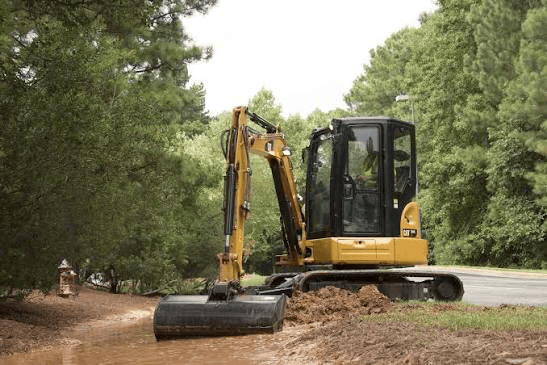
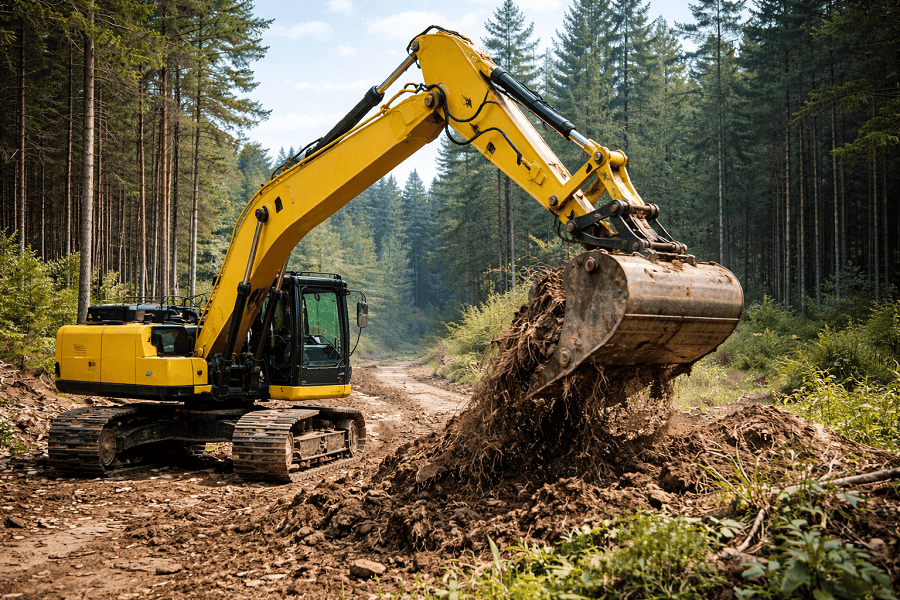
In the port construction project, excavator plays an important role from an early stage. This tool is used for digging soil, dredging of the dock area, to building the foundation. The excavator is equipped with flexible hydraulic arm and large bucket, so it is able to work quickly while reaching large areas that are difficult to handle manually.
In addition to the standard bucket, Excavators can also be equipped with various attachments such as breaker for crushing hard materials, or auger for land drilling. This flexibility is what makes excavators one of the most versatile tools in port projects, especially when the land being worked on has different conditions.
3. Bulldozer
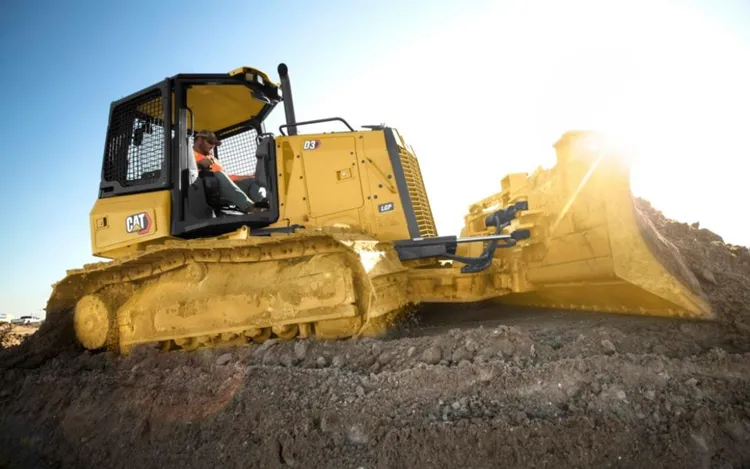
Bulldozer known as a "breaker" in the world of heavy equipment. Its main function is pushing, flatten, as well as clearing the land before the construction phase begins. In the port project, bulldozers are often used to remove soil material, batu, or sand that has accumulated in the dock construction area or access road.
With great pushing force, Bulldozers are able to speed up the land preparation stage which usually takes a long time if you only rely on manual tools. The result, the project area is more quickly ready to enter the main construction phase, so that the construction schedule can be more efficient.
4. Wheel Loader
Wheel loaders are synonymous with the work of moving large amounts of material. This tool is equipped with a large bucket at the front, which can be used to lift sand, batu, land, or other material, then move it to a dump truck or to a stacking area.
In the port project, wheel loaders help speed up the material distribution process, for example when filling backfill material for a pier foundation or unloading material from a transport truck. Because it has rubber wheels (not a chain like a bulldozer), Wheel loaders are also more agile in moving on paved port roads.
5. Vibro Roller
The final stage of land preparation in a port project is usually: land compaction. It's here vibro roller play an important role. This tool works with a vibration system (vibration) which binds soil particles together, so that the surface becomes more stable and able to support heavy loads.
This compaction strength is needed to ensure road access, container parking area, and docks are not easily damaged even though they are passed by heavy equipment and transport vehicles every day. Without good compaction, the soil structure can quickly crack or collapse, which will certainly be detrimental in the long run.
6. Forklift
A forklift is a heavy equipment that may look simple, but its role is very important in the port area, especially in smaller load transfers. This tool is equipped with a fork on the front that can go up and down, used to lift goods on pallets, kotak, atau kemasan lain dengan beban yang tidak terlalu besar dibanding kontainer.
At the port, Forklifts are usually used in storage warehouses to position goods, arranging pallets, or moving cargo from one point to another before loading it onto a transport truck. Because the maneuver is agile, Forklifts are capable of working in confined areas and in closed spaces, which cannot be reached by large equipment such as cranes.
7. Reach Stacker
Reach stackers can be called a more flexible version of port cranes. This tool is specifically designed for lifting and stacking containers, both at the dock and in the storage area (container yard). Reach stackers have long telescopic arms that can reach several rows of containers at once, even up to three to five levels and above.
The advantage of the reach stacker is its speed in moving containers with high flexibility. Compared to gantry cranes which only move on fixed rails, reach stackers can maneuver more freely in the field. Because of that, Reach stackers are often the choice for ports with heavy container activity but require more dynamic equipment mobility.
8. Heavy Hauler Truck
Heavy hauler trucks are special vehicles used to transport super heavy or large cargo in port areas. This tool has a much larger carrying capacity than a normal dump truck, making it suitable for moving large quantities of containers or heavy construction materials.
In the context of the port, Heavy haulers are usually used to transport containers from the dock to the stacking area or vice versa. Its sturdy design makes it able to work optimally even in rough terrain. With a fleet of heavy haulers, Ports can speed up the distribution of materials without having to go back and forth too often, so that operations are more efficient.
Examples of Real Projects Using Heavy Equipment in Ports
There are several examples of real projects in Indonesian ports that use heavy equipment, among others :
1. Tanjung Priok Port (North Jakarta)
Tanjung Priok is the busiest container port in Indonesia. On 2024, container throughput (export + impor) this port reached 7,6 million. Heavy equipment such as gantry cranes and wheel loaders are very important in Priok, because the large volume of containers demands fast and efficient loading and unloading and yard arrangement. Operational speed and minimal delays in the loading and unloading process can reduce "port stay" costs, which if long can be very expensive.
2. Port of Kuala Tanjung (North Sumatra)
Kuala Tanjung Port has a multipurpose terminal capacity of approx 400 thousand container TEUs per year, while also being able to handle liquid bulk (1,2 million tons) and general cargo (250 thousand tons/year). This terminal is equipped with modern facilities such as Ship-to-Shore Cranes, Automated Rubber Tyred Gantry Cranes, and truck terminals. The use of heavy equipment there includes moving containers, bulk load, as well as the construction and maintenance of port access roads, thereby supporting throughput performance and operational speed.
3. Patimban Port (Subang, Jawa Barat)
Patimban Port which was developed as an alternative port / The Tanjung Priok complement is projected to have a container capacity of up to 7,5 million TEUs when all development stages are completed.
So far, the initial stage has been operational, especially vehicle terminals (CBU) which serves the export and import of cars. Use of excavators, bulldozer, dan crane sangat terlihat di tahap reklamasi, construction of vehicle docks and terminal structures, as well as the transfer of soil material in large volumes in the proposed area.
4. New Priok Container Terminal Project (NPCT-1) in Tanjung Priok
This new terminal has achieved a throughput of more than 1 million TEUs in less than two years of commercial operations.
The role of heavy equipment at NPCT-1 is very crucial: Large container crane for loading and unloading ships, reach stacker to move containers in the yard, and other heavy equipment to support the foundation and compaction of the depot area. The existence of NPCT-1 helps reduce the burden on old terminals, speed up the process of distributing goods, and reducing distribution waiting times to and from ports.
Tips for Choosing Heavy Equipment for Port Projects
Before determining the heavy equipment that will be used for the port project, there are several factors to consider, among others:
- Type of work : Determine the type of work first, is it focused on construction, dredging, or unload.
- Payload capacity : You must ensure that it matches the volume of material being worked on.
- Field conditions : Also ensure the condition of the soil in the field, because muddy or hard ground will affect the choice of tool.
- Cost efficiency : You must choose equipment with high productivity so that rent is more economical so costs are also more efficient.
- Availability of certified operators : Make sure the equipment is operated by operators who are SIO and SILO certified so that the project runs safely and smoothly.
Need Heavy Equipment for Port Projects? Trust on PSU!
Managing a port project requires the right and ready-to-use heavy equipment. PT Perkasa Sarana Utama (PSU) present as a heavy equipment rental solution with a complete fleet, Starting from the excavator, You can find bulldozers and so on complete catalog here. All units are regularly maintained and operated by SIO and SILO certified professionals. Therefore, your project can run more efficiently, aman, and on time.
The rental method is quite easy, You can contact us directly via WhatsApp 0812-5233-3349 or you can pass by 4 other ways through this article. Our admin will respond as quickly as possible and find the best solution for your port project heavy equipment needs. Yuk, konsultasikan kepada kami sekarang juga, and don't forget to follow PSU's Instagram @psualatberat so you don't miss the latest information updates from us.