
Long asphalt road, smooth, and sturdy can be created because of a good asphalting process. Road asphalting plays an important role in providing transportation infrastructure in various regions. With the asphalt road, community mobility has become easier, fluent, and comfortable.
The road asphalting process itself requires special techniques and the use of heavy equipment so that the work can take place more efficiently and with better quality. To be able to produce good and long-lasting asphalt roads, There are various stages that must be carried out in a planned manner and require supporting equipment.
Through this article, let's understand what the stages are, equipment, and techniques used in road paving. First of all, Let's get to know the stages in making an asphalt road.
1. Land Preparation and Cleaning
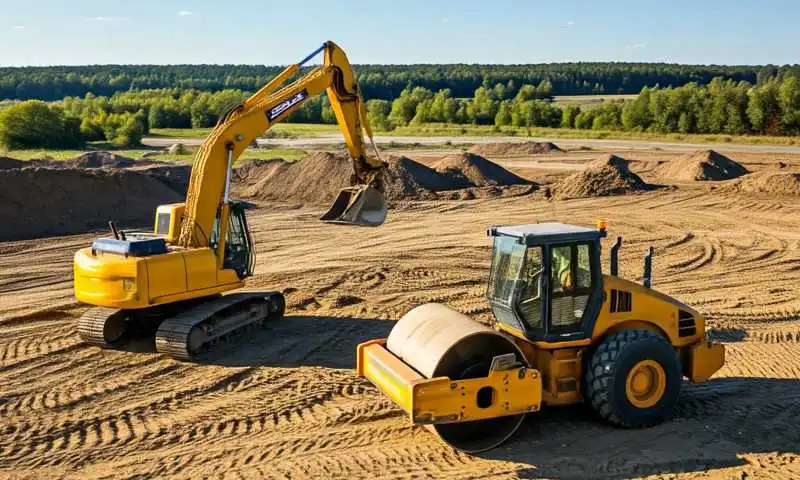
The first stage in the asphalting process is preparing the land that will be used as a road. The area to be paved must be cleared of materials that could interfere, like a tree, batu, rubbish, or old damaged asphalt layers. Cleaning is done using heavy equipment like bulldozer and excavator.
Besides that, Excavation and compaction of the base soil is also carried out so that it has sufficient bearing capacity before covering it with the next layer. Land preparation is very important to ensure that the road foundation is strong and does not easily experience subsidence or cracks in the future.
2. Base Layer Creation (Base Course)
Once the land is ready, The next stage is the installation of the base layer (base course). This layer functions as the main foundation that will support the asphalt above it. Base course usually made from aggregate material such as crushed stone or coarse sand which is spread evenly over the subgrade.
After that, the material is compacted using a compactor such as roller compactor so that it has sufficient strength to withstand the weight of the vehicle. A strong base layer will prevent deformation of the road surface, so that the asphalt does not easily crack or wavy.
3. Installation Prime Coat and Tack Coat
Before the main asphalt is applied, it is necessary to install an adhesive layer in the form of prime coat and tack coat. Prime coat is a layer of liquid asphalt that is sprayed on top base course to increase the adhesion between the base layer and the asphalt to be applied.
Temporary tack coat is an additional layer of adhesive used if the paved road is a repair or addition of a layer on top of the old asphalt. This process aims to ensure that the asphalt layers blend well and do not peel off easily due to vehicle pressure or weather changes.
4. Asphalt Laying (Paving)
After the adhesive layer is dry, The next process is spreading asphalt or paving. The asphalt used is usually a hot asphalt mixture (HMA) which has been processed in a special mixing machine (asphalt mixing plant).
The asphalt is then transported to the project location and spread evenly using tools paver. The use of this tool functions to ensure the thickness and evenness of the asphalt complies with the established technical specifications.
5. Asphalt Compaction (Compaction)
After the asphalt is spread, The next stage is compaction using roller compactor. This compaction process is carried out in stages with several types roller, like tandem roller and pneumatic roller, to ensure the asphalt is truly dense and has optimal durability.
Compaction aims to reduce air pores in the asphalt mixture, thereby increasing the density and strength of the road structure. If the asphalt is not compacted properly, then air cavities can arise which cause the road to crack easily and become damaged in a short time
6. Finishing and Quality Checking
At this level, The road surface is checked to ensure that the asphalt has been laid evenly and that there are no imperfections. Checking is done by measuring the layer thickness, asphalt strength, as well as its flexibility to adapt to predetermined standards.
If any discrepancies are found, so workers need to make repairs to certain areas before the road is opened for use. This stage is important to ensure that the paved road is of good quality, long lasting, and comfortable for users.
Equipment Used in Road Paving
The asphalting process requires a number of equipment designed with special functions. That is why each stage of road asphalting will be carried out using different heavy equipment.
The following are some of the heavy equipment used in road asphalting and their respective functions:
| Instrument | Function |
| Asphalt Paver (Asphalt Finisher) | This tool works to spread hot asphalt mixture (Hot Mix Asphalt) evenly over the road surface and provide thickness according to specifications. |
| Tandem Roller (Double Drum Roller) | This compactor has two steel drums in the front and back that serve to compact the newly laid asphalt layer. |
| Pneumatic Tyre Roller (PTR) | This tool uses rubber tires with air pressure which functions for final compaction so that the asphalt surface is more sticky and does not crack easily. |
| Asphalt Sprayer | This tool is used to spray an adhesive layer in the form of prime coat or tack coat before spreading asphalt. |
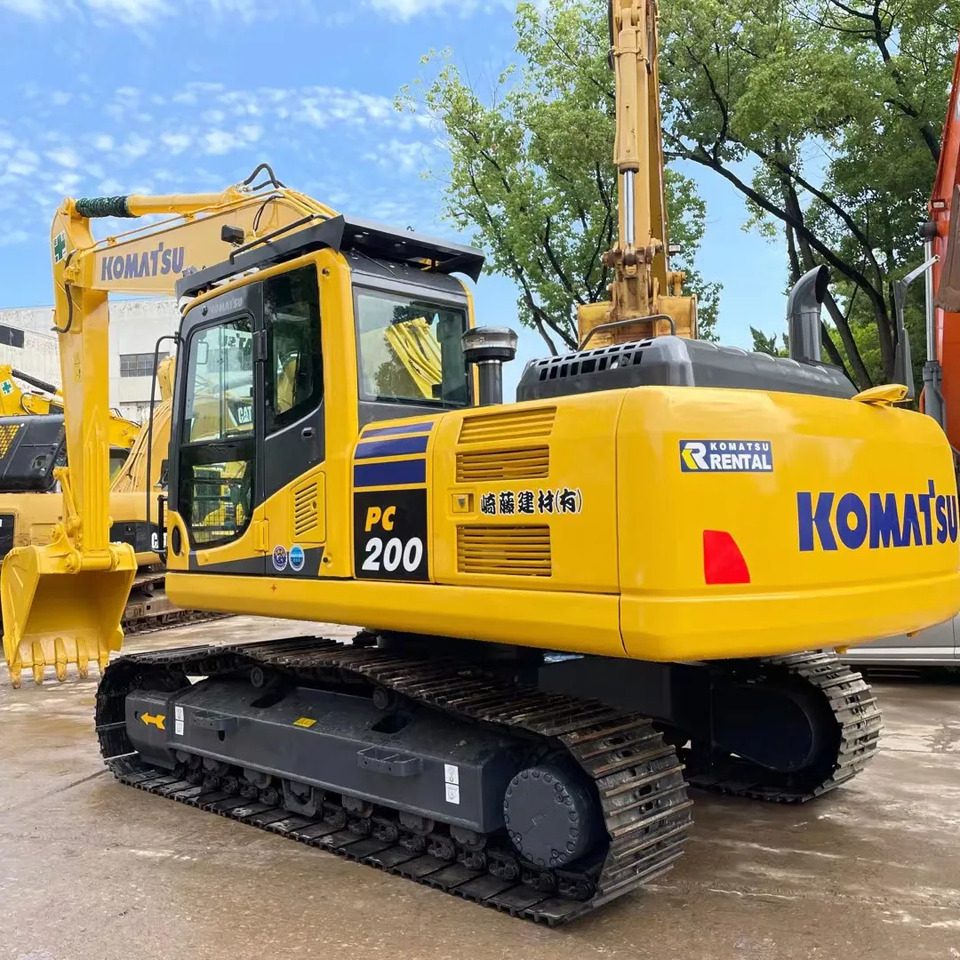
| Excavator | This tool is deployed in the land preparation stage, namely to dig and clean the area to be paved. |
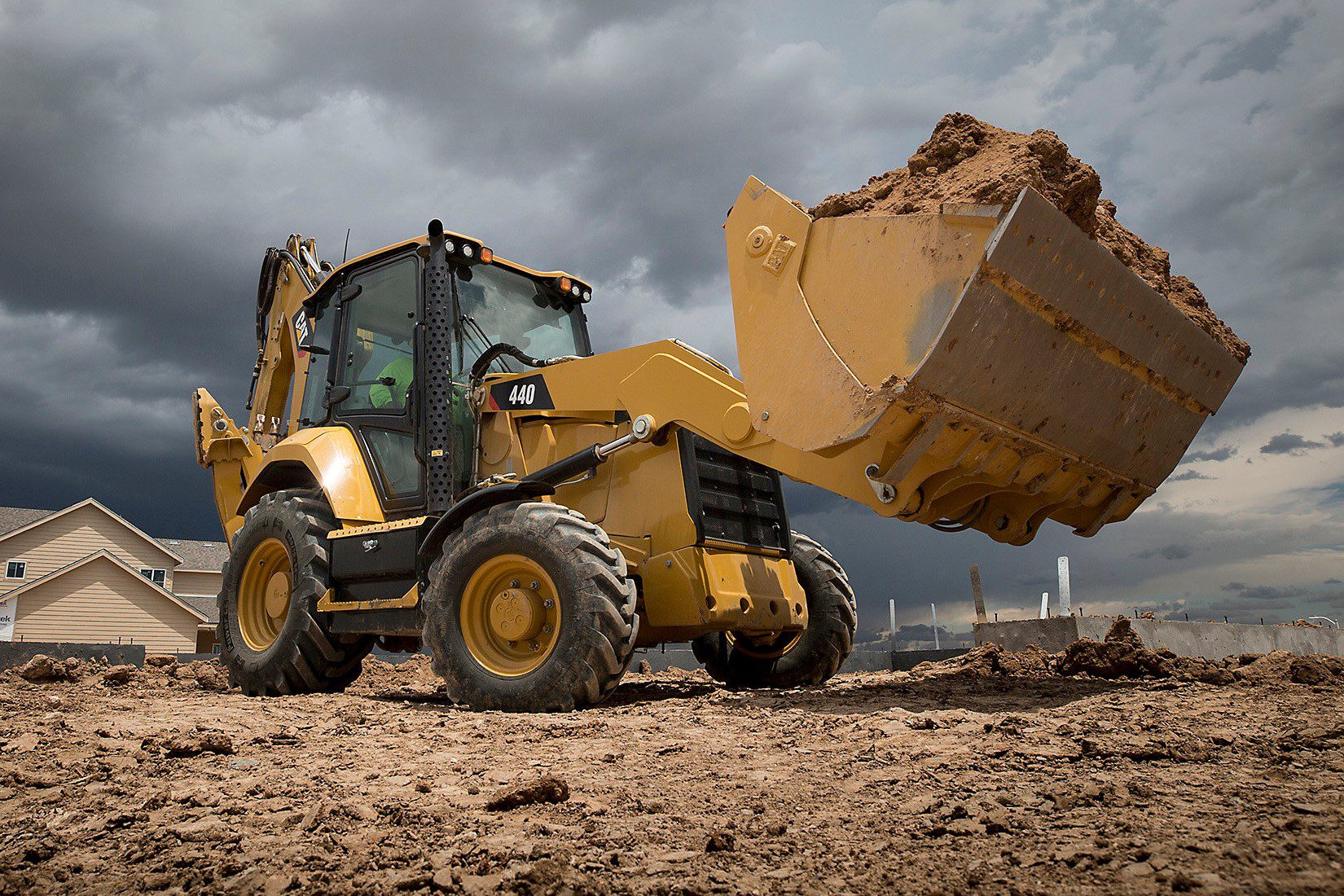
| Bulldozer | This tool functions to clear land that interferes with the construction process and level the ground surface before asphalting. |
| Motor Grader | This tool is used to shape and level the road surface before the asphalt layer is applied. |
| Dump Truck | This tool is used to transport materials and carry hot asphalt mixture from asphalt mixing plant to the project location. |
| Air Compressor | This tool can be used to clean road surfaces before spraying prime coat and tack coat, as well as operating air-based equipment such as jack hammer for dismantling old asphalt. |
Types of Road Paving Techniques
There are various types of asphalting techniques which are differentiated based on the asphalt mixture material. Each asphalting technique can be applied according to needs, and each has its own advantages.
The following are several types of asphalting techniques that can be applied in road construction:
1. Hot Mix Asphalt (HMA) – Hot Asphalt
HMA or hot asphalt is the type of asphalt mixture most commonly used for highways, toll road, and airport runways. This asphalt is applied under hot conditions between 150–180°C, so it requires special heavy equipment for installation.
Hot mix asphalt made by mixing aggregates (crushed stone, pasir, and fillers) with hot asphalt on Asphalt Mixing Plant (AMP). This mixture is then transported by dump truck to the project location and spread using asphalt paver before being compacted with tandem roller or pneumatic tyre roller.
Advantage:
- Has high resistance to heavy vehicle loads and weather changes
- Able to produce a smooth and comfortable road surface to walk on
- Suitable for roads with high traffic volumes
Deficit:
- The application process requires heavy equipment and expert personnel
- Must be applied hot, so it is susceptible to temperature changes during transportation
- Production and installation costs are higher than other types
2. Warm Mix Asphalt (WMA) – Warm Asphalt
WMA is an asphalt mixture that is used at lower temperatures than HMA, that is about 100–140°C. This technique is often used for urban roads, environmental road, and projects with strict environmental requirements.
Warm mix asphalt made by mixing aggregate with asphalt that has been given special additives, like wax or surfactant. This technique allows mixing at lower temperatures without reducing the quality of the asphalt.
Advantage:
- Reduces fuel consumption and greenhouse gas emissions
- Can be applied in cold weather conditions or more humid environments
- More energy efficient than HMA
Deficit:
- The cost of additional additives can increase production prices
- Not as strong as HMA in handling very high traffic loads
- Requires special technology in mixing and application.
3. Cold Mix Asphalt (CMA) – Cold Asphalt
CMA or cold asphalt is a type of asphalt mixture that does not require heating in the mixing process. This technique is generally used for temporary road repairs, road pavement in rural areas, as well as projects with limited access to heating equipment.
Cold mix asphalt made by mixing aggregate with emulsified asphalt or solvent-based asphalt which can bind the material without having to be heated. This mixture can be applied directly to the road surface and allowed to harden naturally.
Advantage:
- Does not require heating so it is more energy efficient
- It is easier to use and can be applied manually without heavy equipment
- Suitable for remote areas or projects on a limited budget
Deficit:
- Has lower resistance than HMA and WMA
- It takes longer to harden and reach optimal strength
- Not suitable for roads with high traffic or heavy vehicles
4. Seal Coating
Seal coating is an asphalt resurfacing technique used to extend the life of the road surface and protect it from weather damage, air, and chemicals. This technique is generally used for environmental roads, parking lot, and roads with light to moderate traffic.
The asphalting method involves mixing liquid asphalt with additional materials such as mineral filler, polymer, or latex rubber. This mixture is applied in a thin layer using a spray or squeegee, then allowed to dry before the road can be used again.
Advantage:
- Protects the road surface from small cracks, air, and UV light
- Improve the appearance of the road to make it look newer and smoother
- More cost effective than complete asphalt repairs.
Deficit:
- Only as an additional protection, not a structural repair
- It must be applied regularly so that its effectiveness is maintained
- Not suitable for roads with very heavy traffic loads
Read Also: 10 Types of Heavy Equipment for Road Construction
Factors Affecting Paving Quality
Have you ever found that there are asphalt roads that last a long time and some that are easily damaged?, like holes, crack, or wavy? Each asphalt road may have different qualities because it is influenced by various factors.
The following are a number of factors that influence the quality of road asphalting:
- Material quality: The quality of the asphalt material used must meet specification standards to ensure adhesion and temperature resistance. Besides that, The aggregate must have strength, size, and the right gradation to produce a strong and long-lasting road layer.
- Implementation techniques: Mixing process, spreading, and compaction must be carried out according to standards. Besides that, compaction must be carried out with appropriate heavy equipment to ensure optimal density.
- Weather factor: Environmental temperature, humidity, and rainfall greatly influences the success of asphalting. Asphalting should be carried out in dry weather conditions with an optimal temperature of between 15-30°C so that the asphalt can bind the aggregate well..
- Layer Thickness and Density: An asphalt layer that is too thin will not be strong enough to support the weight of the vehicle, while those that are too thick can cause cracks. Poor compaction can also cause excess air spaces which accelerate road damage.
- Drainage Quality: A poor drainage system causes water to pool on the surface or seep into the road structure, thereby accelerating asphalt damage due to erosion and the release of bonds between aggregates.
If you need quality heavy equipment for road paving, You can rent it at PT Perkasa Sarana Utama (PSU). We have various types of heavy equipment to handle work in the asphalting stages. Our heavy equipment is maintained routinely by professional mechanics to ensure prime performance.
Our team will provide consultation to you to find heavy equipment for the purchase or rental of heavy equipment according to project needs. Don't hesitate to contact us at CS: 0811358378 or email: rent@psualatberat.com. To be more connected, You can also follow our Instagram at @psualatberat.