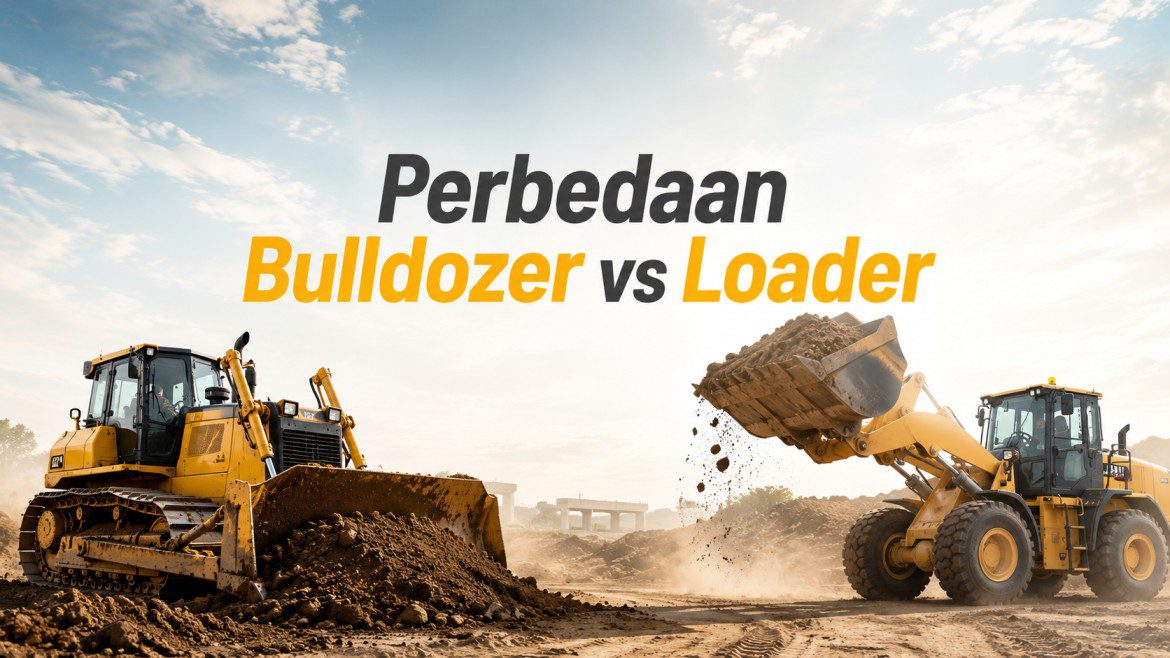
In the world of construction and heavy equipment work, bulldozers and loaders are often considered similar tools. Both are equally large, both work on the project land, and both work to transfer material in large quantities. It's not surprising that many people, especially those who have just entered the world of projects or mining, Still confused about differentiating between these two tools.
Whereas, bulldozers and loaders are designed for different tasks. Choosing the wrong tool not only makes work slower, but it can also increase project operational costs.
This article will thoroughly examine the differences between bulldozers and loaders, starting from understanding, function, tool shape, to tips on choosing the right tool according to your project needs.
What Is A Bulldozer?
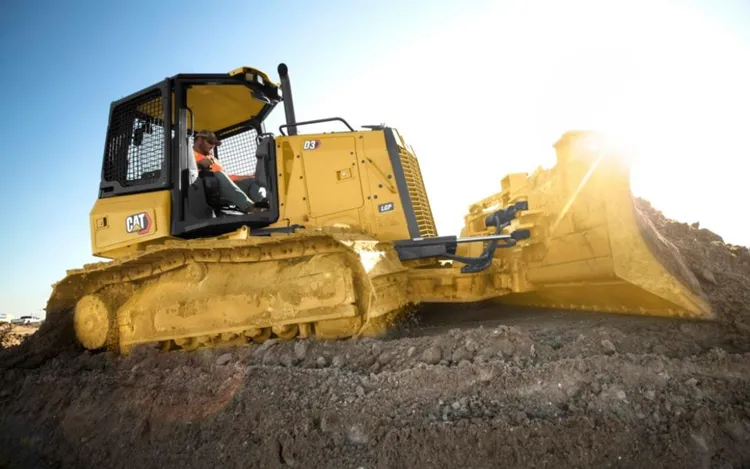
Bulldozers are chain-wheeled heavy equipment (crawler) which is equipped with a blade or large knife on the front. This tool is specifically designed for pushing, dig, flatten, and move large volumes of soil and materials. Its heavy weight and large engine power make bulldozers very reliable for heavy work, although its mobility on the road is not as fast as a tire-wheeled device.
In general, bulldozers are most often used for:
- Pushing soil material, pasir, or large amounts of debris
- Excavation and land clearing work (land clearing)
- Level and loosen the soil surface
- Forming land contours in construction and mining projects
- Clean up debris or remaining building materials
What is a Loader?
Loader, or what is also known as a wheel loader, front loader, maupun front-end loader, is a heavy tool that works to load and transport material such as soil, pasir, gravel, to rocks from one point to another in the project area. Different from a bulldozer, The loader uses a large bucket at the front to dredge and lift material.
Loaders generally move using tire wheels, so it is more agile and faster than bulldozers that use chain wheels. Several types of loaders that are commonly found in the field include wheel loaders, backhoe loader, then skid steer loader, with various sizes ranging from compact class to large class for industrial scale projects.
Loaders are most often used for:
- Transporting materials such as sand, land, and rocks in the project area
- Loading materials into dump trucks or other means of transportation
- Cleaning debris or remaining materials at the project site
- Digging on a light to medium scale
- Area maintenance work, including snow removal in a four-season country
Main Differences Between Bulldozers and Loaders
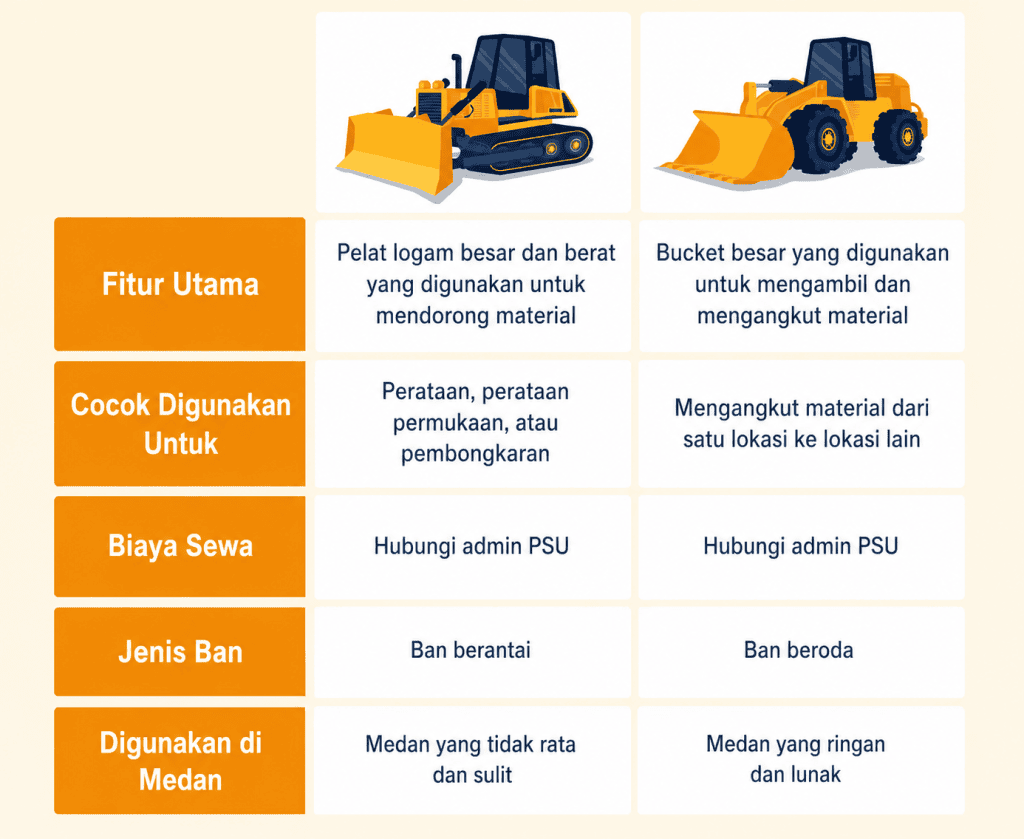
Even though both are classified as heavy equipment for earthworks, Bulldozers and loaders have a number of fundamental differences that are important to understand before determining which tool best suits your project.
1. Tool Shape: Blade vs Bucket
The most striking difference lies in the working tools at the front. A bulldozer uses a large steel blade or knife that serves as a material pusher on the ground surface, utilize the weight and power of the machine to push or dig. Meanwhile, The loader uses a large bucket which functions to both dredge and lift material, so that the material can be moved to another location.
2. Main function: Pushing vs Carrying
Because the bulldozer does not have a container to accommodate the material, This tool cannot be used for transport. Its function focuses more on the work of leveling the ground surface, dig, and clearing land. On the contrary, The loader with its bucket is very suitable for transporting large amounts of material from one point to another, including loading materials directly onto dump trucks.
3. Mobility and Drive Systems
Bulldozers generally use chain wheels (track), which provides strong traction in various ground conditions but limits speed and mobility. Loaders usually use tire wheels, so it's much more agile, can move faster, and more flexible moving from one work area to another within the project.
4. Abilities in the Work Field
Thanks to the chain wheel, bulldozers excel on uneven terrain, muddy, or rough textured, so it is very reliable in mining projects or newly opened land. Loader, on the other hand, works best on a relatively flat and stable surface. Operating a loader while fully loaded on sloping or unstable terrain risks causing the machine to lose balance.
5. Scale and Type of Work
Bulldozers are more often chosen for large-scale work such as land clearing, flattening of land contours, and mining work. Loaders are more flexible for various project scales, ranging from small residential projects to large-scale construction and mining projects, especially for the needs of loading and transporting materials repeatedly.
When to Choose a Bulldozer or Loader?
Choosing the right tool really depends on the needs of the work in the field. As a simple guide, Use a bulldozer if your project requires a lot of pushing force to level the land, dig, or open a new area. Meanwhile, choose a loader if the main need of the project is to load and transport large amounts of material efficiently from one point to another.
In many construction and mining projects, bulldozers and loaders are actually used simultaneously so that work can run more efficiently. The bulldozer is tasked with leveling and pushing material, while the loader transports and loads the material onto the next conveyance.
Conclusion
Bulldozers and loaders are both considered to be mainstay heavy equipment in construction and mining projects, but both have a function, tool shape, mobility, and different operating fields. Bulldozers excel at pushing, dig, and leveling the ground in heavy terrain, while loaders excel at transporting and loading materials quickly and flexibly. Understanding the differences between bulldozers and loaders will help you determine the most appropriate heavy equipment according to your needs and project scale.
Need a Bulldozer or Loader for your Project?
After understanding the difference between bulldozers and loaders, Now is the time to determine the heavy equipment that best suits your project needs. PT. Perkasa Sarana Utama is ready to help prepare the bulldozer unit, wheel loader, and various other heavy equipment in prime condition and supported by an experienced professional team.
Consult your project's heavy equipment needs now with PT. Perkasa Sarana Utama, and get the right heavy equipment solution, efficient, and reliable to support the smooth running of work in the field.