The mining industry is one of the sectors that has the most influence on the world economy. From the coal that powers power plants to the copper and gold used in modern technology, Almost all aspects of our lives depend on mining results. However, not everyone understands how these minerals are taken from the earth.
In the world of mining, There are two main methods that are most often used: tambang terbuka dan tambang bawah tanah. These two methods have very different approaches, good from a technical point of view, operating costs, safety level, and its impact on the environment.
The question is: which one is more profitable and safer? The answer is not always simple. Each method has advantages and disadvantages that depend on geological conditions, mineral depth, as well as economic factors.
This article will discuss in depth the differences between open pit mines and underground mines, starting from how it works to comparing the benefits and risks that accompany it.
What is Open Pit Mining?
Open-pit mining is a mining method that is carried out by gradually digging the surface of the soil until it reaches the desired mineral layer. This method is often called also open pit mining or surface mining.
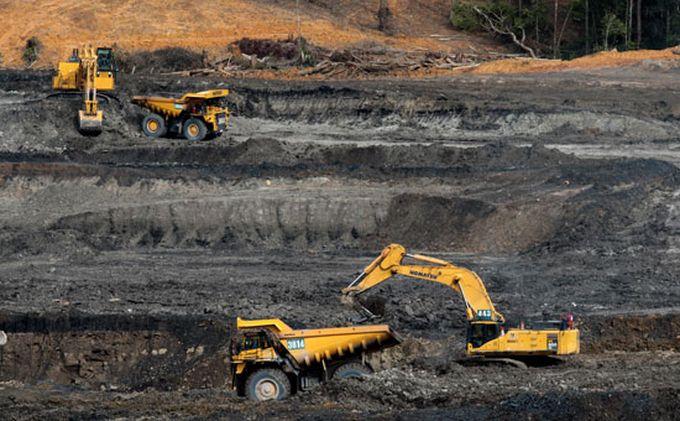
If you have ever seen a photo of a giant mine shaped like a bowl or large crater on the earth's surface, that is an example of an open mine. Cover soil layer or overburden first peeled using heavy equipment, then the mineral ore is taken from the layer below it.
Open-pit mining is usually used when mineral deposits are relatively close to the ground surface. Therefore, This method is often applied to coal mining, copper, it's not, and various other minerals.
Some of the largest mines in the world use this method because of its ability to produce large amounts of production.
How Open Mining Works?
The open-pit mining process generally begins with a geological study to determine the location and depth of the mineral deposit. Once the location is confirmed to have economic reserves, Mining companies began to clear land and build infrastructure such as mining roads.
Mining process then done through several main stages:
- Stripping the cover soil layer (overburden removal) : Layers of soil and rocks that do not contain minerals are lifted first.
- Establishment of mine levels (bench) : The mine is made of terraces like giant stairs to maintain slope stability.
- Drilling and blasting : Hard rocks are crushed using explosives to make them easier to transport.
- Material transportation : Bijih mineral diangkut menggunakan dump truck giant towards the processing facility.
- Mineral processing : Minerals are processed to separate valuable metals from rocks.
This entire process is carried out using heavy equipment such as excavator, dragline, bulldozer, and dump truck large capacity.
Kelebihan Tambang Terbuka
One of the main reasons why many mining companies choose the open pit mining method is cost efficiency.
- Lower Production Costs
Because all activities are carried out on the surface, the company does not need to build tunnels or complicated ventilation systems. This makes operational costs per ton of mineral much cheaper. - Large Scale Production
Open pit mining allows the use of very large heavy equipment. With high production capacity, perusahaan dapat mengekstraksi jutaan ton material setiap tahun. - Akses Lebih Mudah
Semua area tambang dapat diakses langsung dari permukaan. Hal ini mempermudah transportasi material, tool maintenance, serta pengawasan operasional. - Teknologi Lebih Sederhana
Dibandingkan dengan tambang bawah tanah, metode ini relatif lebih mudah dikelola karena tidak membutuhkan sistem ventilasi kompleks atau pengamanan struktur terowongan.
Kekurangan Tambang Terbuka
Meskipun efisien secara ekonomi, tambang terbuka juga memiliki beberapa kelemahan yang tidak bisa diabaikan.
- Dampak Lingkungan Besar
Tambang terbuka memerlukan area lahan yang sangat luas. Proses pengupasan tanah sering menyebabkan deforestasi, perubahan bentang alam, serta kerusakan habitat alami. - Kedalaman Terbatas
Semakin dalam tambang digali, semakin tidak stabil lereng tambang. Pada titik tertentu, this method is no longer safe or economical to continue. - Dust and Pollution
Heavy equipment activity, blasting, and transporting materials produces large amounts of dust which can affect the air quality around the mine.
What Are Underground Mines??
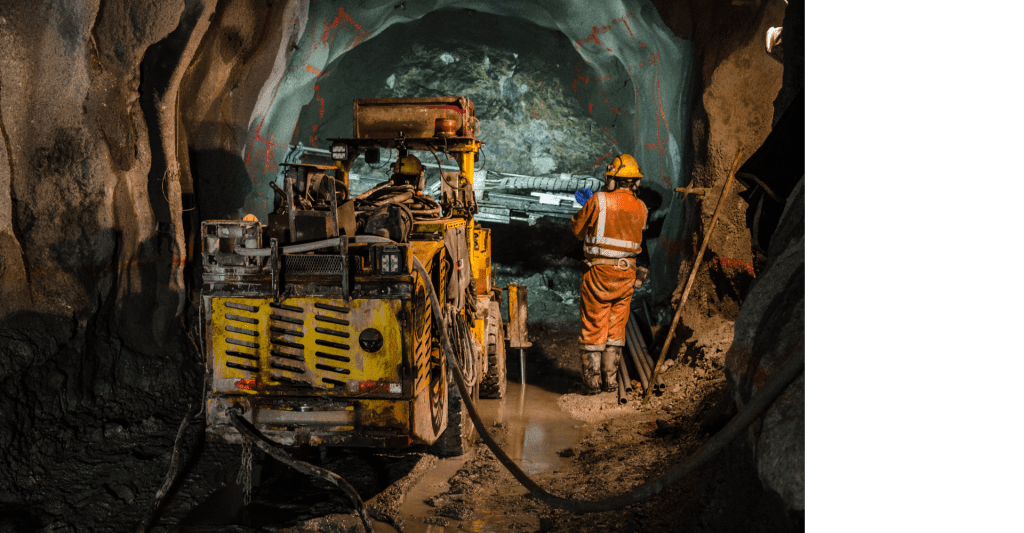
Different from open mines, Underground mining is a mining method that is carried out by making tunnels into mineral deposits deep in the earth.
This method is used when mineral reserves lie too deep to be reached through surface mining.
Underground mines are often used to mine gold, nickel, seng, and various other metals that have high value.
Mining workers have to enter a network of tunnels that can reach depths of hundreds to thousands of meters below the ground surface.
How Underground Mines Work?
Underground mining begins with the construction of access to mineral deposits. This access usually takes the form of shaft (vertical hole) or drift (horizontal tunnel).
After reaching the mineral layer, The mining process is carried out through several methods, like:
- Room and pillar
- Cut and fill
- Sublevel stoping
- Block caving
The mined material is then transported out through the system conveyor, freight car, or a special lift.
Because it is deep underground, This mine requires a very complex support system, like an air vent, drainage system, and strengthening rock structures.
Advantages of Underground Mines
Underground mines have several advantages that keep them in use despite their high costs.
- Smaller Environmental Impact
Because most of the activities are carried out underground, Damage to the land surface is relatively smaller compared to open pit mining. - Suitable for Deep Deposits
This method allows companies to mine very deep minerals without having to dig up the entire surface of the ground. - More Selective Mining
Underground mines allow for more precise mining, so only high quality ore is extracted.
Lack of Underground Mines
However, this method also has serious challenges.
- High Operational Costs
Tunnel construction, ventilation system, as well as special equipment make underground mining costs much more expensive. - Greater Security Risk
Workers face various risks such as rockfall, dangerous gas, to a fire in the tunnel. - Complex Ventilation System
Fresh air must be continuously pumped into the mine to ensure workers can breathe safely.
Comparison of Open Pits and Underground Mines
To understand the differences between these two methods more clearly, we can look at some of the main aspects.
- Operating costs
From an economic perspective, open pit mines are almost always cheaper. Mining costs per ton of material in open pit mines can be several times lower than underground mines. This is due to the use of large-scale heavy equipment and simpler operational processes. On the contrary, Underground mines require large investments in infrastructure development and safety systems. - Productivity
Open pit mines have advantages in terms of production volume. With giant heavy equipment and a large work area, Production can reach millions of tons per year. Underground mines typically produce smaller volumes due to limited working space. - Job Security
In general, Open-pit mines are considered safer for workers. The main risks usually come from slope failures or heavy equipment accidents. However, workers still have direct access to the surface so evacuation is easier. In the underground mine, risks are much more complex. Dangerous gases such as methane, lack of oxygen, and the potential for rockfall to cause serious danger. - Environmental Impact
In terms of the environment, Underground mines are often considered friendlier. Open-pit mines change the landscape drastically and require very large areas. Giant mine holes remaining after operations are completed can also be a long-term problem if not properly rehabilitated.
Determining Factors for Selection of Mining Methods
Mining companies do not choose mining methods haphazardly. This decision is usually determined by several main factors.
- Depth of Mineral Deposits
If the deposit is near the surface, Open pit mines are usually more economical. However, if the minerals are deep in the ground, underground mining becomes a more realistic option. - Up to Minerals (Ore Grade)
Deposits with high mineral content are often mined using underground methods because they are more selective. - Geological Conditions
Rock stability, structure geology, and the risk of landslides are important considerations in choosing a mining method. - Commodity Prices
If mineral prices are very high, Underground mining methods can still be profitable even though the operational costs are large.
Examples of the Largest Mines in the World
Several famous mines in the world show how both methods are used on a large scale.
One example largest open pit mine is the Grasberg Mine in Indonesia, which is one of the largest gold and copper mines in the world.
Meanwhile, Mines such as Kiruna Mine in Sweden are known as one of the largest underground mines producing large quantities of iron ore.
These examples show that no one method is always better. It all depends on geological conditions and production needs.
So, Which is more profitable and safer?
If seen in general, Open-pit mining is usually more profitable from an economic perspective because operational costs are lower and production can be carried out on a large scale.
But from an environmental perspective, Underground mines are often considered better because there is less damage to the ground surface.
From a safety perspective, Both methods have their own risks. Open pit mines are safer in terms of evacuation and access, but still has the potential for landslides. Underground mines pose more complex risks because workers are deep in the earth.
Eventually, no method is completely superior in all aspects. The choice of mining method always depends on a combination of geological factors, economy, technology, and regulations.
Heavy Equipment Solutions for Your Mining Project
Apart from geological and economic factors, The availability of reliable heavy equipment determines the success of every mining project. To meet the need for high quality heavy equipment, including excavator, bulldozer, and dump truck which is a crucial part of mining operations, You can rely on trusted service providers.
PT Perkasa Sarana Utama (PSU) is provider of heavy equipment rental and rental services trusted in Indonesia since 2004. We offer complete solutions for heavy equipment rental that support various needs, starting from construction projects, industry, to mining. With one-stop service, we provide high quality heavy equipment products, including excavators, bulldozer, and others, as well as integrated solutions to ensure every project runs smoothly. PSU is committed to being the main choice for heavy equipment rental services in Indonesia, with professional services ready to meet customer needs in all sectors.
Come on, entrust your fleet of heavy equipment for your project by contacting us here:
- WhatsApp: 0812-5233-3349
- Email: rent@psualatberat.com
- Website: psualatberat.com
Clear, with advances in modern technology, The mining industry continues to strive to increase efficiency while minimizing environmental impacts and safety risks.
Because behind every gram of metal that we use every day, there is a long and complex process that takes place deep in the bowels of the earth.