Bulldozers are one of the heavy equipment most often used in land clearing work, Land leveling, to large-scale earthmoving work. Even though it is known to be tough and stable, bulldozers have one major risk that often goes unnoticed, that is blind spot or areas that cannot be seen directly by the operator from inside the cab.
Many cases of heavy equipment work accidents in the field occur not because of technical equipment errors, but rather because of the operator's limited view of the surrounding environment. Therefore, Understanding blind spots on bulldozers and implementing appropriate safety procedures is the main key to preventing work accidents on construction projects.
What is the Blind Spot on a Bulldozer?
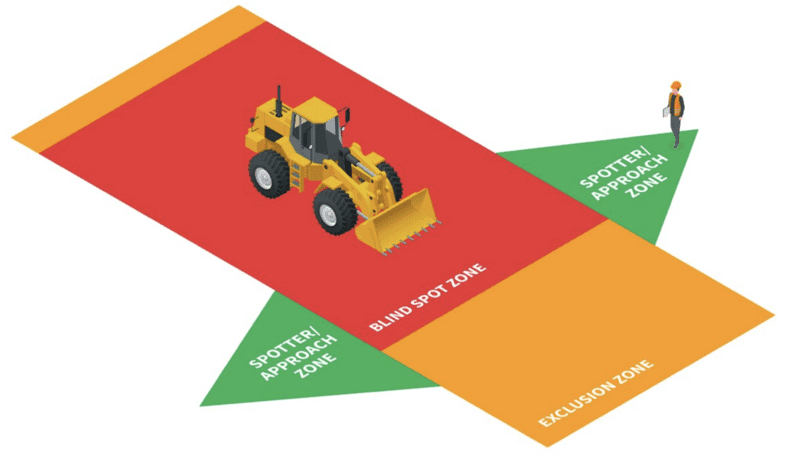
Blind spot on bulldozer is the area around the equipment that is not directly visible to the operator when operating the unit from inside the cab. This limitation is influenced by the design of the tool, such as the large blade size, cabin position, frame structure, as well as the overall dimensions of the tool.
Blind spots are not a sign of a lack of operator skill. Even experienced operators still have limited visibility if they are not supported by additional safety systems and correct work procedures. Therefore, Blind spots should be understood as characteristics of tools for which risk needs to be managed.
The Most Risky Blind Spot Area on Bulldozers
Blind Spot in the Front Area of the Blade
Blade bulldozer large and tall ones often block the operator's view of the area directly in front and below the tool. This condition is high risk, especially when there are workers, material, or other objects in the area. No additional visual inspection, the operator may not be aware of obstacles in front of the tool.
Blind Spot at the Back of the Bulldozer
The rear area is the most dangerous blind spot on a bulldozer. When the unit moves backwards, operators rely heavily on rearview mirrors, reverse alarm, or camera. In projects that are busy with activity, This area is often passed by workers or other equipment, so the risk of accidents increases if there is no good supervision.
Blind Spot on the Right and Left Side of the Tool
Although smaller than the front and rear, Blind spots on the right and left still need to be watched out for. Risks usually arise when the bulldozer turns or maneuvers in a narrow area, especially when there are support vehicles or workers passing around the equipment.
Risk of Work Accidents Due to Blind Spots on Bulldozers
Blind spots that are not managed properly can cause various types of work accidents, starting from being hit by workers around the equipment, collision with other heavy equipment, to damage to project facilities. The impact is not only materially detrimental, but it also has the potential to cause serious and even fatal injuries.
Besides that, work accidents can cause temporary suspension of the project, thorough safety evaluation, and have an impact on the reputation of contractors and project owners. Therefore, Blind spot risk control is an important part of heavy equipment K3 system.
Factors that Increase the Risk of Blind Spots in the Field
Solid and Dynamic Work Area Conditions
Construction projects often involve many workers, heavy equipment, and support vehicles in one area. This condition increases the potential for blind spots, especially if the movement of tools and workers is not well coordinated.
Lack of Communication between Operators and Field Workersn
The lack of clear communication between the operator and the ground man or flagman can increase the risk of accidents. Without clear signals or direction, it is difficult for operators to ensure that the area around the tool is completely safe before maneuvering.
Limitations of Additional Safety Devices
Bulldozers that are not equipped with reverse alarms, camera, or a visual warning system will rely heavily on the operator's direct line of sight. This increases the risk of blind spots, especially in areas with limited visibility.
Safe Tips for Operators to Avoid Accidents Due to Blind Spots
Carry out an area inspection before operating the tool
Before starting work, Operators need to ensure the area around the bulldozer is safe. Immediate visual inspection and coordination with field teams helps reduce the risk of blind spots from the start of operations.
Using a Clear and Consistent Communication System
Use of standard hand signals, radio communications, and the presence of a flagman really helps operators in monitoring areas that are not visible. Good communication is an important link between operators and workers around the equipment.
Utilize Additional Safety Devices
Reverse alarm, rear camera, and warning lights help improve equipment visibility in the field. This device does not replace operator vigilance, but is an additional layer of safety to minimize the risk of accidents.
Operate the Bulldozer According to SOP and Safe Speed
Discipline in following SOPs and controlling work speed greatly influences safety. Slow and controlled maneuvers give operators and nearby workers more time to anticipate each other's tool movements.
The Company's Role in Reducing Blind Spot Risk
Controlling the risk of blind spots is not just the operator's responsibility, but also heavy equipment supply and management companies. Companies need to ensure that the units used have a complete safety system, undergo regular inspections, and operated by competent and certified operators.
Continuous K3 training and field supervision are also important factors in creating a safe work environment.
Work Safety Commitment in Bulldozer Operations
As a heavy equipment provider, PT Perkasa Sarana Utama (PSU) is committed to supporting work safety on construction projects by providing well-maintained bulldozer units, equipped with a safety system according to standards, and supported by experienced operators.
Through consistent implementation of safety procedures and equipment maintenance, The risk of accidents due to blind spots can be minimized so that projects can run safely and efficiently.