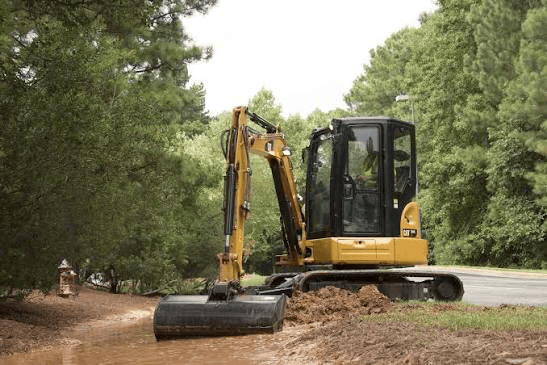
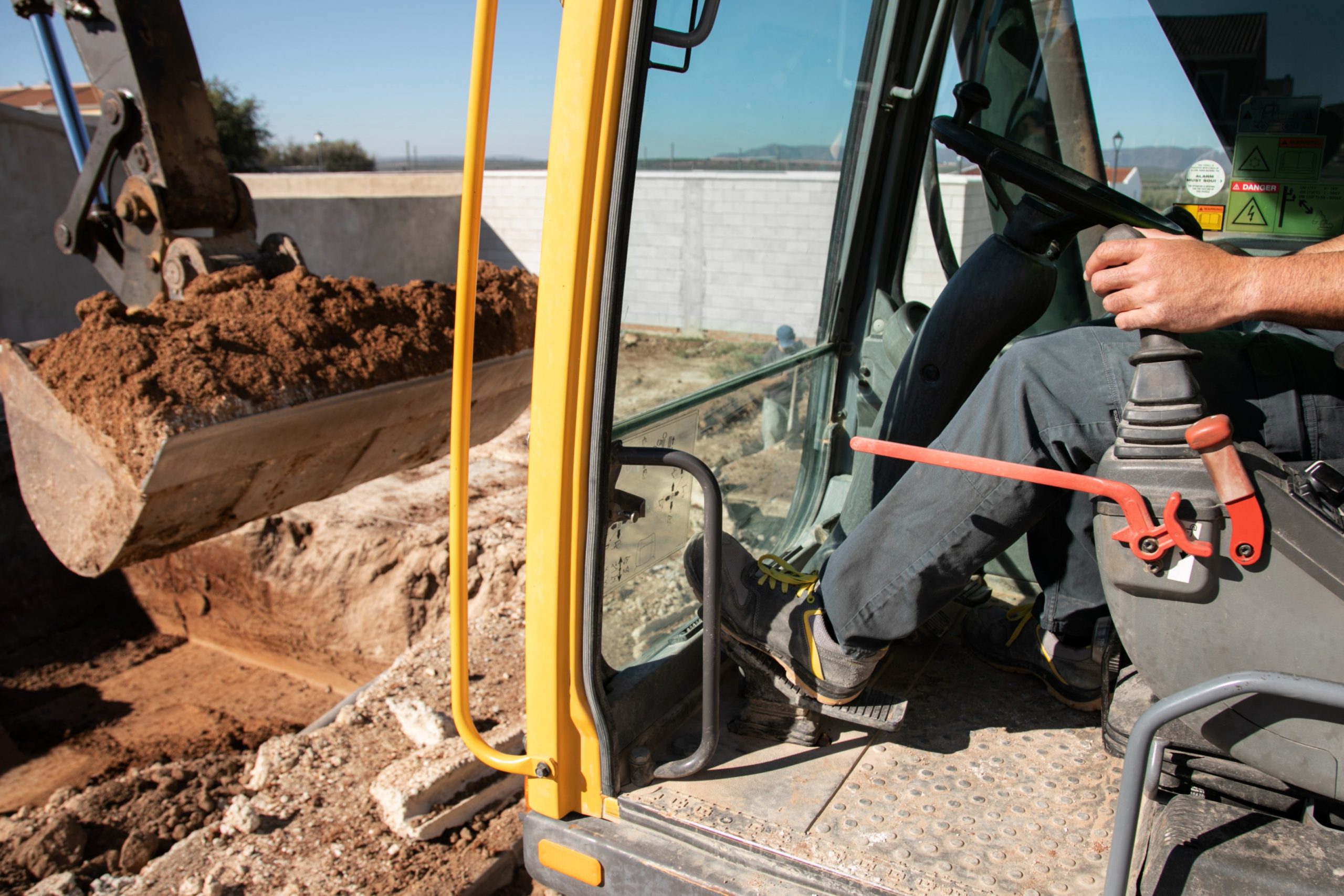
The operation of an excavator is actually much more complex than it seems. The operator must understand how the tool works, recognize working environmental conditions, estimate the balance point of the tool, and knowing the limits of the excavator's capabilities so that each job can be carried out safely and efficiently.
Mistakes such as turning the excavator body too fast, digging too close to the track, lifting loads that exceed the capacity of the tool, or park the excavator in an unstable area, can cause serious accidents. The impact is not just equipment damage, but can also result in injury to operators and workers around the work area. It is for this reason that every excavator manufacturer always equips its products with operating and safety procedures that operators must comply with.
In Indonesia itself, Safety aspects in operating heavy equipment are regulated through various occupational safety and health regulations (K3), including Regulation of the Minister of Manpower of the Republic of Indonesia Number 8 Year 2020 concerning Occupational Safety and Health of Lifting Aircraft and Transport Aircraft. At international level, Heavy equipment safety standards are also regulated in ISO 20474-1 Earth-moving Machinery – Safety, while various best practice guidelines are published by Occupational Safety and Health Administration (OSHA), National Institute for Occupational Safety and Health (NIOSH), as well as heavy equipment manufacturers such as Komatsu, Caterpillar, Hitachi, and Kobelco.
Therefore, learning how to operate an excavator is not enough just to know the function of each lever in the cab. Operators must also understand why each procedure is created and how the procedure can reduce the risk of accidents during work.
In this article, We will discuss how to operate an excavator according to work safety standards in a coherent manner, starting from understanding how an excavator works, correct operating steps, parking techniques after work is completed, to various errors that must be avoided while the tool is operating. By understanding the whole process, You don't just know how to run an excavator, but also understand how to operate it safely, efficient, and in accordance with industry best practices.
Why Safety Standards Are So Important When Operating an Excavator?
Each excavator works by utilizing engine power and a high-pressure hydraulic system to produce force that can dig into the ground, lifting heavy materials, or destroying building structures. The energy produced by the hydraulic system is so great that a small error in operation can turn into a serious accident that we do not want.
The first risk that occurs most often is tool loses stability. Excavator has a center of gravity (center of gravity) which always changes according to the boom position, arm, bucket, and the load being lifted. When the operator lifts material too far from the tool body or works on an uneven surface, The center of gravity can shift, causing the excavator to roll over. This condition often occurs in work at the edge of excavations, slope, or embankment areas that are not dense enough.
Apart from the risk of rolling over, operators must also understand their existence blind spot, namely the area around the excavator that cannot be seen directly from inside the cabin. Although modern excavators are equipped with large glass and even rear cameras, there are still some points that are difficult to monitor. When workers are in the area without the operator's knowledge, potential for being hit by a boom, bucket, and counterweight will increase significantly.
Another danger that is often overlooked is the presence of underground utilities. On urban projects, Excavators are often used to dig drainage channels, foundation, and installation of utilities. Before work starts, the operator must confirm the location of the gas pipe, water pipe, power cable, and telecommunications networks have been correctly identified. Digging without knowing the existence of these utilities can result in infrastructure damage and endanger all workers at the project site.
Operators should also pay attention conditions above the work area, especially if the excavator works near overhead power lines (overhead power line). The excavator boom has a vertical reach high enough that it can approach power lines without the operator realizing it. OSHA and various heavy equipment manufacturers recommend that excavators always maintain a safe distance from electrical networks according to the voltage used to avoid the risk of electric shock or surge current. (electrical arcing).
The next safety factor is related to work field characteristics. Soil that is too soft, muddy, or has just been landfilled and has a lower bearing capacity than soil that has been compacted. Even though visually it looks flat, This surface may not necessarily be able to support the weight of an excavator which can reach tens of tonnes. Therefore, operators should always evaluate surface conditions before moving the tool to the next work location.
All of these potential dangers are the reason why every excavator operating procedure always begins with checking the condition of the equipment and the work environment. This step is not just a formality, but rather part of the risk control system so that operators can identify potential hazards before the tool starts working.
But before studying the operating procedures, There is one basic thing that needs to be understood first, namely how the excavator produces every movement the operator makes. By understanding its working principles, You will more easily understand why every lever must be operated smoothly and why every safety procedure has a strong technical reason.
How to Operate an Excavator Step by Step According to Work Safety Standards
Ideally, Professional operators do not immediately start the machine as soon as they arrive at the project site. There are a series of checks that must be carried out first to ensure the excavator is in a safe condition and ready to work.
This sequence is important because most equipment damage and work accidents start from simple things that are overlooked before work begins. Therefore, The following procedures should be carried out sequentially every time the excavator is operated.
1. Perform a Thorough Inspection Before Starting the Engine
Examination before surgery or pre-operational inspection is the first step that cannot be missed. The goal is not just to ensure the excavator can be started, but also identifies potential problems that could develop into serious damage if the tool is still forced to work.
The inspection starts from the environmental conditions around and/or excavator component. Operators need to make sure there are none employee, material, other vehicle, or objects that are too close to the excavator turning area. This is important because when the upper structure starts to rotate, The counterweight at the back will move with a radius wide enough to endanger people around it.
Furthermore, The operator carries out a visual inspection of the physical condition of the equipment. Pay attention to whether there are engine oil leaks, oli hydraulic, fuel, or coolant dripping under the excavator. Even the slightest leak should not be taken lightly because it can be an indication of damage to the seal, hose, or hydraulic connections.
The level was mesin, coolant, hydraulic oil, and fuel should also be checked according to the manufacturer's recommendations. Engine oil that is below the minimum limit can accelerate wear of the engine's internal components. Meanwhile, Insufficient hydraulic oil volume can cause unstable attachment movement while increasing the risk of air entering the hydraulic system.
The examination then continues in part undercarriage excavator. Operators need to ensure the track is not damaged, there are no loose bolts, and the track tension is still within specifications. Tracks that are too loose have the potential to come loose when the excavator turns, Meanwhile, a track that is too tight can accelerate wear of the rollers and sprockets.
Attachments such as buckets and breakers must also be checked. Make sure the pin, bushing, and the retaining pin is still installed properly. When the excavator uses a quick coupler, The locking mechanism must be ensured to be completely locked before the tool starts working.
After the external inspection is complete, The operator enters the cab to check the function of the instrument panel, work light, horn, reverse alarm, windshield wiper, to the rear camera when available. All of these devices are part of a safety system that helps operators while working in the field.
This inspection may only take approx 10 until 15 minute, but the benefits are enormous in being able to detect potential disruptions before they develop into much more expensive damage.
2. Enter the Cabin in a Safe Way
Many people don't realize that the risk of an accident can actually occur before the excavator is even started. One example is when the operator climbs into the cabin in a hurry.
The correct way is to use principles three-point contact, that is always maintain three points of contact between the body and the tool. Two arms and one leg, or two legs and one hand, must always be attached to the handrail or steps during the process of climbing and descending the excavator. This technique helps maintain balance so that the risk of slipping can be reduced, especially when the equipment is wet due to rain or covered in mud.
Arriving in the cabin, the operator does not immediately start the machine. The first step is to adjust the position of the chair so that all controls can be reached comfortably without having to bend the body or stretch the arms excessively.
After that, rearview mirror and camera monitor are adjustable to provide the widest possible view of the work area. Although excavators have blind spots, proper adjustment will help reduce areas that are not visible to the operator.
The next step is to wear the seat belt. There are still operators who think that seat belts are only needed when the excavator is traveling on the road. Whereas, The seat belt actually functions to protect the operator when the excavator loses balance or experiences a collision during work.
Before the machine is turned on, The safety lock lever must also be ensured that it is still in the locked position. The goal is to prevent the attachment from moving accidentally when the engine starts.
3. Start the machine according to the procedure
After all inspections are complete, the operator can start the machine according to the procedure recommended by the manufacturer.
When the new engine starts, Avoid immediately increasing the engine speed to high RPM. Diesel engines need time for lubricating oil to circulate to all internal components such as the crankshaft, camshaft, turbocharger, and injection system. At the same time, hydraulic systems also need time to reach the ideal working temperature.
Therefore, The engine should be allowed to run at idle for a few minutes. During this process the operator can pay attention to the instrument panel to ensure that no warning indicators are on, such as low oil pressure, excessive engine temperature, or problems with the hydraulic system.
When the excavator is directly forced to work when the hydraulic oil is still cold, Oil viscosity that is still high can make the attachment response less smooth and increase the workload of the hydraulic pump.
After the working temperature begins to stabilize and all indicators show normal conditions, The excavator is ready to be moved to the work area.
4. Move the Excavator to the Work Area
Before the excavator starts running, The operator must ensure that the area in front and behind the tool is completely safe. When there are workers who help give instructions, Communication must be carried out using previously agreed hand signals or radio communication.
When the excavator is moving, The bucket should be positioned approx 30 until 40 centimeters from the ground. This position keeps the tool's center of gravity low so that the excavator becomes more stable when moving. Lifting the boom too high when walking will actually increase the risk of the tool losing balance, especially when crossing uneven surfaces.
Travel speed also needs to be adjusted to terrain conditions. In narrow or busy project areas, The excavator should move at low speed so that the operator has sufficient time to react if obstacles suddenly appear.
When you have to go uphill or downhill, the position of the attachment also needs to be adjusted. Under certain conditions, The bucket can be used as an additional support when the excavator loses traction. But this technique can only be done when it is recommended by the manufacturer and the operator has understood the procedure correctly.
Arriving at the work area, The excavator is positioned on a stable surface before excavation work begins.
5. Operating the Boom, Arm, Bucket, and Coordinated Swing
This is the stage that most determines the quality of an operator. Although the excavator has several joystick and pedal controls, the operations are not carried out separately, but rather coordinated.
The boom works to raise and lower the attachment to determine the height of the excavator's working range. The arm regulates the distance of the bucket from the excavator body, while the bucket is responsible for carrying out the digging process, take, or disposing of material. On the other hand, The swing motor allows the entire top of the excavator to rotate to the right or left to move material to the desired location.
An experienced operator will combine all these movements together. When the bucket starts to sink into the ground, The arm is pulled slowly while the bucket is closed and the boom is raised at almost the same time. Once the bucket is full, the upper structure is rotated towards the discharge point without sudden movement. This kind of coordination makes the work cycle faster while reducing fuel consumption because the hydraulic system works more efficiently.
The thing to pay attention to is that all movements are carried out smoothly and gradually. Moving the joystick suddenly can make the attachment move faster, but it also produces recoil that increases the load on the hydraulic cylinder, pin, bushing, to the boom structure. In the long run, This habit can accelerate the wear and tear of excavator components.
Once the operator is able to control all excavator movements in a coordinated manner, The next step is to understand safe excavation techniques so that productivity remains high without compromising work safety.
6. Carrying out Excavation Work Safely and Efficiently
Once the excavator is in a stable working position and the operator is able to coordinate boom movements, arm, bucket, and swing well, The next stage is carrying out excavation work. It is at this stage that productivity and work safety must be in balance. Production targets are important, However, work done too aggressively can actually increase the risk of accidents as well as accelerate the wear and tear of excavator components.
Before the bucket touches the ground, The operator needs to ensure that the excavator is positioned on a surface that is strong enough to support the weight of the tool. When the soil looks soft, just stockpiled, or still contain a high water content, it is best to check first or use additional pads when needed. This aims to prevent the track from sinking or the excavator losing stability during the excavation process.
When you start digging, The bucket should enter the ground gradually following the cutting angle (cutting angle) appropriate. What happens to novice operators is that they try to force the bucket too deep in one fell swoop in the hope of getting the job done faster. Whereas, This method actually puts an excessive load on the hydraulic system and increases fuel consumption. Besides that, Buckets that are forced to dig beyond their capacity often experience slippage, resulting in less neat excavation results.
A more effective movement is to let the bucket cut the ground progressively while the arm is slowly pulled towards the excavator. Once the bucket is filled, operator lifts the attachment sufficiently, rotate the upper structure towards the exhaust area, then remove the material smoothly without impact. This work cycle does look simple, but it is a basic technique used in almost all construction projects because it is able to maintain productivity while extending the life of tool components.
During the excavation process, The operator must also pay attention to the distance between the excavator and the edge of the excavation. The excavator should not be placed too close to the edge of the hole because the weight of the tool can cause landslides or subsidence. The safe distance depends on the type of soil, excavation depth, as well as field conditions, So an evaluation of soil stability must always be carried out before work begins.
Excavated materials or spoil pile should also be placed at a safe distance from the edge of the excavation. Piling soil too close to the edge of the hole will add pressure to the excavation walls and increase the risk of landslides. Apart from endangering workers, This condition can also cause the excavator to lose its footing if the ground beneath the track decreases.
On projects that require transport vehicles such as dump trucks, coordination between excavator operators and truck drivers is an equally important factor. The position of the dump truck should be on the side of the excavator so that the loading process can be carried out without swinging the bucket through the vehicle cabin. This method is not only safer, but also speed up the material loading cycle.
Apart from paying attention to excavation techniques, The operator must also adapt the way the excavator works to the project environmental conditions. Each terrain has different challenges so operating procedures need to be adjusted.
The Correct Way to Park an Excavator After the Work is Completed
Excavator parking procedures are part of work safety standards that are as important as the operating process. Mistakes when parking the tool can cause the excavator to move itself, damage the hydraulic system, it even endangers workers around the parking location.
The first step before turning off the machine is to choose flat parking area, stable, and far from other heavy equipment traffic routes. A flat surface helps maintain the weight distribution of the excavator so that the risk of the tool shifting or toppling while not in use can be reduced.
Once the parking position is confirmed to be safe, operator lowers the boom, arm, and the bucket slowly until the bucket touches the ground. This position is very important because attachments that are left hanging store hydraulic energy and have the potential to slowly lower if there is a decrease in pressure in the system. By placing the bucket on the ground, The load is transferred to the surface so that the hydraulic system does not sustain pressure continuously.
Furthermore, all control levers are returned to the neutral position before the engine speed is reduced to idle. The machine should not be turned off immediately after working under high load. Allowing about three to five minutes of idle time helps stabilize the engine temperature while allowing the oil to circulate properly before the engine stops. This step is very important, especially on excavators that use turbochargers because it can help extend the life of these components.
After the machine is turned off, safety lock lever is activated again so that the attachment cannot move when someone accidentally touches the joystick. The ignition key is then removed before the operator exits the cab using the technique three-point contact like when climbing into a tool.
If the excavator is parked in an area that has a slight slope and it is not possible to find a completely flat location, The operator can use additional supports on the track according to company procedures to prevent the equipment from moving due to gravity.
By completing all these stages, the excavator is not only in a safe condition, but also more readily reusable on the next job.
However, work safety is not only affected by the procedures performed by the operator. There are also a number of habits that seem trivial but are actually the main cause of various accidents in the field. Therefore, before ending the discussion regarding excavator operation, it is important to understand the various actions that should never be performed while the appliance is in operation.
What Not to Do When Operating an Excavator?
Most accidents involving excavators are not caused by equipment failure, except by work habits that are not in accordance with safety procedures. Because of that, in addition to understanding how to operate an excavator correctly, Operators also need to know what actions should never be taken while the equipment is in operation.
One of the most frequently encountered errors is lifting loads exceeding the lifting capacity of the excavator. It should be understood that excavators are basically designed as digging tools, not as a crane. Although excavators can be used to lift certain materials, each unit has lifting capacity which is affected by the weight of the load, lifting radius, boom position, and the condition of the surface on which the tool stands. Ignoring these limits can cause the excavator to lose balance or even tip over towards the load.
The next error is digging too close to the excavator track. When the bucket picks up material just below the track position, The soil supporting the tool will slowly be taken away. as a result, The excavator loses the foundation that supports its weight so the risk of landslides or collapse becomes much greater. Therefore, The operator always maintains a safe distance between the edge of the excavation and the position of the excavator during work.
Operators are also not recommended to make sudden swing movements, especially when the bucket is full. Rotating movements that are too fast produce centrifugal force which can shift the excavator's center of gravity. Apart from making the tool less stable, This habit also increases the load on the swing bearing, swing motor, and the upper frame structure of the excavator.
Another mistake that is often encountered in the field is using buckets to transport workers to higher locations. This practice is very dangerous! Excavator buckets are not designed as a means of transporting people because they do not have a shock protection system or safety devices such as those found on manlifts or aerial work platforms.. The risk of workers falling due to tool movement or losing balance is very high.
Operators should also not ignore the presence of electrical lines on top of the excavator while working. Excavator booms that move too close to power lines can cause electrical surges (electrical arcing) even though the attachment does not touch the cable directly. This condition can endanger the operator, workers around the tool, even damage the excavator's electrical system.
Besides that, Leaving the excavator with the engine running without the operator in the cab is an action that must be avoided! Even though the attachment has been lowered to the ground, a device that is still on still has the potential to move if someone else touches the controls or a mechanical failure occurs. Before leaving the cabin, the operator must always ensure the attachment is on the ground, control in neutral position, safety lock is active, and the machine has been turned off.
The last mistake that is often considered trivial is ignoring warning indicators on the excavator instrument panel. Oil pressure indicator light, engine temperature, or hydraulic system problems is not just information, but rather a sign that the excavator requires further inspection. Forcing the tool to continue working when the warning indicator is on can cause much more serious damage and increase the risk of work accidents.
By avoiding these various habits, the operator not only takes care of his own safety, but also helps extend the life of the excavator and reduce project maintenance costs.
What is the Best Way to Learn Excavator Operation?
Learning to operate an excavator requires a combination of theoretical understanding, practical training, and field experience. Mastering just one aspect is not enough to create a competent operator who is able to work according to safety standards.
The first step that should be done is to study the basic theory regarding the working principles of excavators. Understanding of boom function, arm, bucket, swing, travel motor, and the hydraulic system will help prospective operators understand the reasons behind every movement they make. With a good theoretical basis, operators don't just know how to move tools, but also understand the technical impact of each action taken.
After understanding the theory, Training using a simulator is a very useful step. Currently, many training institutions and heavy equipment manufacturers provide excavator simulators with control characteristics that resemble real units. Through simulators, aspiring operators can practice coordinating boom movements, arm, bucket, and swing without facing the risk of accidents or equipment damage.
The next stage is direct practice in the field with the assistance of an experienced instructor or senior operator. At this level, prospective operators begin to learn how to read ground conditions, calculate the working radius, maintaining communication with other employees, and adapting operating techniques to various project conditions. This kind of experience is difficult to gain through theory alone because each project has different challenges.
Apart from technical abilities, Operators also need to understand the work safety procedures implemented by the company where they work. Every company generally has Standard Operating Procedure (SOP) tailored to the type of project, tool characteristics, and the safety management system implemented. Complying with SOPs is an important part of maintaining consistent safe work practices throughout the project area.
For operators who want to improve their competence professionally, Participating in heavy equipment operator training and obtaining recognized certification is a highly recommended step. SIO (Operator's License) excavator is an official certificate from the Ministry of Manpower of the Republic of Indonesia (Indonesian Ministry of Manpower), as proof that someone has competence and qualifications to operate the excavator.
This certification not only shows that the operator understands operating techniques and safety aspects, but it is also an added value when working on large-scale projects that strictly apply K3 standards.
It is important to remember that the learning process does not stop after someone is able to operate one type of excavator. Each manufacturer has its own control layout, safety features, and different technologies. Therefore, the operator still needs to study the operating manual (Operation and Maintenance Manual) each time using a different excavator model.
Operator Safety is Also Affected by Excavator Conditions
Operator competency is a major factor in work safety, but the condition of the excavator used has an equally large influence. A properly maintained excavator will provide a more stable control response, Minimizes the risk of sudden damage, and help operators work more safely and productively.
Because of that, every excavator needs a program preventive maintenance which is carried out periodically according to the manufacturer's recommendations. Inspection of the machine, hydraulic system, undercarriage, hose, hydraulic cylinder, pins and bushings, electrical system, to safety devices such as alarms and work lights should be part of the maintenance routine.
Regular maintenance also helps detect damage at an early stage before it develops into a larger problem. For example, A small leak in the hydraulic hose that is immediately repaired will be much cheaper than damage to the hydraulic pump due to the system working with unstable pressure.
For project owners, Using a well-maintained excavator not only increases work productivity, but also reduces the risk of the project stopping due to equipment damage in the middle of work.
Rent an Excavator that is Ready to Work to Support Project Safety and Productivity
Even though the operator understands the operating procedures according to work safety standards, The success of the work is still influenced by the condition of the tools used. Excavators that receive routine maintenance, periodic inspections, and ready to work will provide more stable performance while helping to reduce the risk of disruption during the project.
If your project requires an excavator that is ready to use without having to spend a large investment to purchase a unit, PT Perkasa Sarana Utama provides rental services for various types of excavators that can be tailored to work needs.
Starting from mini excavator for work in narrow areas, standard excavator for medium to large scale construction and infrastructure projects, long arm excavator for the needs of the river dredging project, until breaker excavator for concrete and rock demolition work, All units are regularly maintained so they are ready for use in the field. With excellent equipment condition, operators can work more safely, efficient, and productive throughout the project.
PT Perkasa Sarana Utama Team are also ready to help you determine the most suitable type of excavator based on job characteristics, project site conditions, as well as the productivity targets to be achieved. Thus, You don't just get the right weight, but also solutions that support the smooth implementation of the overall project.
WhatsApp: 0812-5233-3349
Email: rent@psualatberat.com
Website: psualatberat.com
Conclusion
Operating an excavator according to work safety standards is not just about being able to move a joystick or completing work quickly. Operators must understand how excavators work, carry out inspections before the equipment is operated, carry out each movement in a coordinated manner, adapt work techniques to field conditions, and ending work using correct parking procedures.
On the other hand, Work safety is also influenced by the operator's discipline in avoiding various risky actions, such as lifting a load that exceeds the capacity of the tool, working too close to the edge of the excavation, or ignore the damage indicator on the instrument panel. All these procedures aim to protect the operator, workers around the tool, while keeping the excavator in optimal condition.
Eventually, The combination of competent operators and well-maintained excavators is the main key to creating a safe working environment, increase project productivity, and extend the service life of heavy equipment. By implementing these practices consistently, every excavation job can be completed more efficiently without sacrificing work safety aspects.