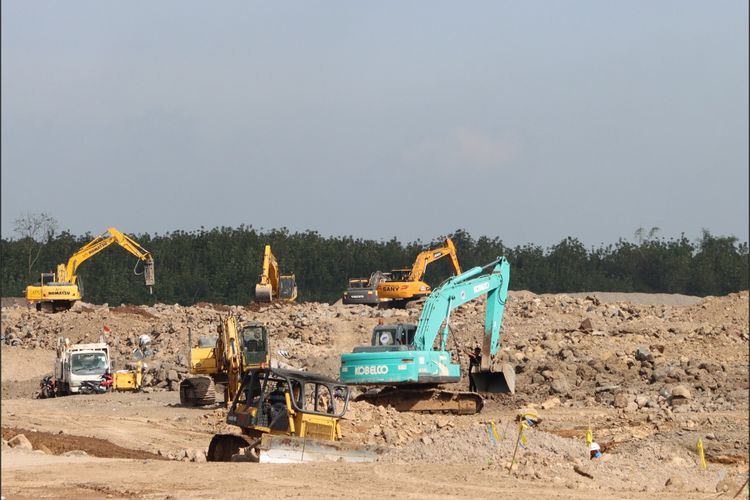
Airport construction is a large-scale project that demands high precision and maximum efficiency. Every level, starting from excavation to runway finishing, requires specific heavy equipment so that the work results comply with international aviation safety standards. Mistakes in choosing tools can have fatal consequences, such as runway surface irregularities or project delays.
According to a report by the International Air Transport Association (IATA, 2024), Airport projects have almost twice the level of complexity compared to ordinary construction projects because they involve large work areas and very high precision, runway flatness tolerance, for example, only about ±5 mm. Therefore, Choosing the right heavy equipment is not just about time efficiency, but it also concerns aviation safety and the long-term quality of infrastructure.
This article will discuss the various types of heavy equipment used in airport construction projects, specific function in the field, usage challenges, as well as the best solution to maintain performance and precision during construction.
1. Excavator for Excavation and Land Clearing
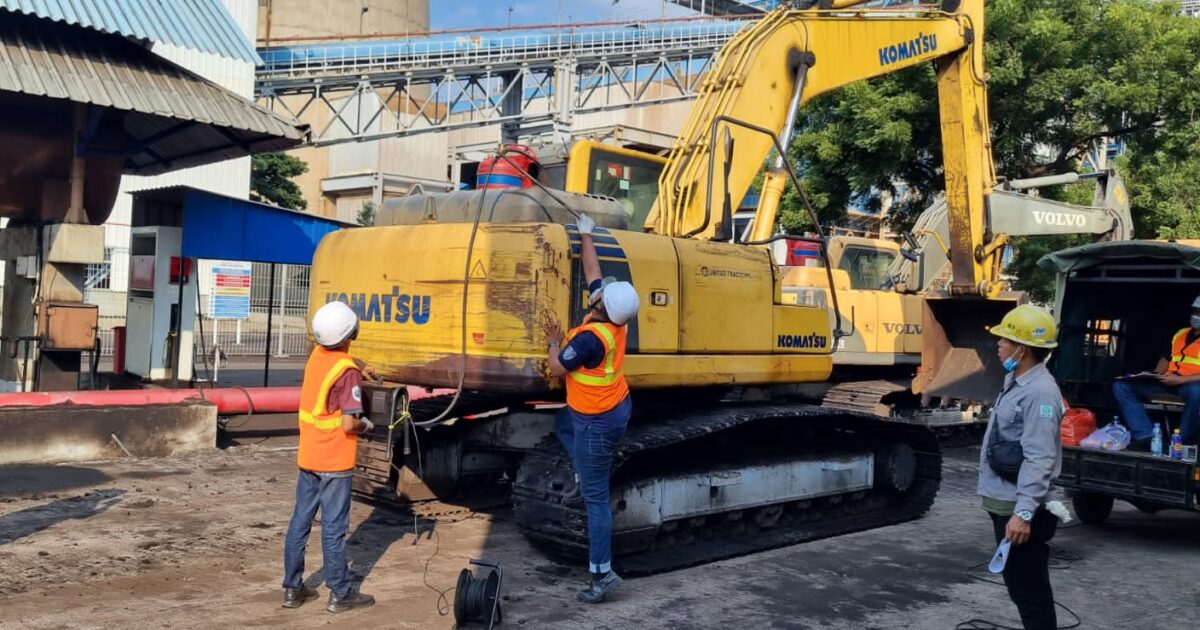
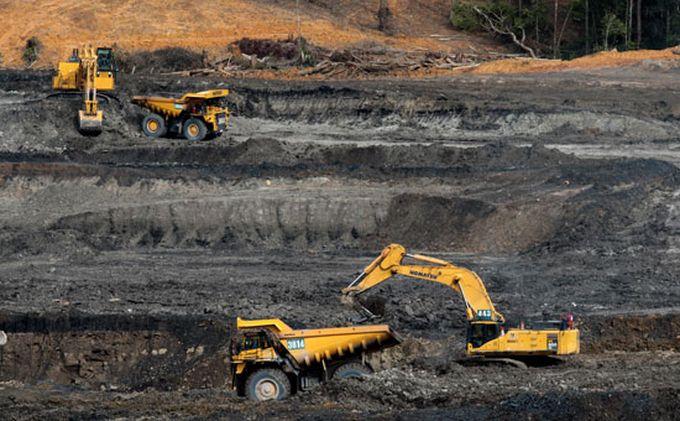
Excavator become the main tool in the early stages of an airport project, especially in excavation work, land disposal, and area cleaning. This tool is capable of working in various terrain conditions, from clay to rocky soil with high precision thanks to its hydraulic system. Apart from digging, Excavators are also used to level land and move large materials, making it a versatile tool at the preparation level.
2. Bulldozer for Runway Leveling
Bulldozers are used to level large areas of land before the runway construction phase begins. With a large steel blade on the front, This tool can push and level large volumes of soil material. On the airport project, bulldozer often used to create a runway base contour so that it is stable and ready to be compacted by the next tool.
3. Motor Grader for Foundation Formation
Motor graders play an important role in forming and perfecting the slope of the runway or taxiway surface. This tool has a long knife in the middle whose angle and height can be adjusted, allows operators to achieve extremely precise levels of leveling. Graders are often used after bulldozers to ensure the ground surface is completely level according to the airport's technical design.
4. Asphalt Paver for Runway Paving
Asphalt paver is used to spread hot asphalt mixture evenly over the runway surface. This machine is equipped with an auger and screed which ensures the asphalt layer has a consistent thickness and density. In airport projects, Modern asphalt paver is even equipped with a GPS-based automation system to maintain thickness accuracy down to millimeters.
5. Road Roller for Asphalt Compaction
After asphalting, The next stage is compaction using a road roller or compactor. This tool has a large steel cylinder which functions to press the asphalt to make it dense and strong. The type of roller used in airport projects is usually a vibratory roller, because it produces additional vibrations that increase the level of surface density to 98% from maximum standards.
6. Wheel Loader untuk Material Handling
Wheel loaders function to move materials such as sand, gravel, or mix asphalt into other equipment such as a dump truck or asphalt paver. Their maneuvering speed and large carrying capacity make wheel loaders an important support tool in large-scale projects such as airports. Besides that, This tool is also often used to clean work areas from leftover materials so that the site remains safe and tidy.
7. Dump Truck for Material Transportation
Dump trucks act as the main transportation equipment in airport projects. This tool is used to carry soil material, aggregate, or asphalt from one location to another in the project area. The type of dump truck used usually has a large capacity (20–30 ton) to speed up the distribution of materials over a large work area.
8. Concrete Mixer Truck for Apron Construction
Concrete mixer trucks or molen trucks are used to transport and mix fresh concrete for apron areas, taxiway, and terminals. The drum on this truck continues to rotate so that the concrete mixture remains homogeneous until it reaches the casting location. The use of a mixer truck is very important to maintain consistent concrete quality, especially on large projects such as aircraft aprons that require high strength.
Specific Functions of Each Heavy Equipment in the Field
There are specific functions of each stage for the construction of an airport project for each heavy equipment, see below.
1. Level of Land Preparation and Cleaning
At this level, excavators and bulldozers work together to remove vegetation, peel off the topsoil, and form the initial elevation. Wheel loaders and dump trucks help speed up the transfer of excavated materials to disposal or landfill areas.
2. Runway and Taxiway Construction Phase
Once the land is ready, motor grader, asphalt paver, and the road roller takes over the job. The motor grader ensures the grade meets technical specifications, asphalt paver spreads asphalt evenly, and road rollers compact the surface to meet international runway roughness standards.
3. Level of Finishing and Quality Control
At the final stage, additional coating work was carried out, painting runway markings, and final leveling using a grader and light roller. Concrete mixer trucks are used for casting additional elements such as aircraft parking areas (apron) and drainage around the runway.
Summary Table of Heavy Equipment and Its Functions per Airport Project Stage
| Project Stage | Heavy Equipment | Main function |
| Land Preparation and Cleaning | Excavator | Dig, flatten, and clearing the airport project land area |
| Bulldozer | Level the ground contour and prepare the runway base | |
| Wheel Loader | Transferring soil and stone materials to other transport equipment | |
| Dump Truck | Transporting excavated or stockpiled materials to another location | |
| Runway and Taxiway Construction | Motor Grader | Forms the slope and flatness of the soil or asphalt surface |
| Asphalt Paver | Spread the asphalt mixture evenly on the runway area | |
| Road Roller | Compact the layers of soil and asphalt so that they are strong and smooth | |
| Concrete Mixer Truck | Transport and mix concrete for apron or taxiway construction | |
| Finishing dan Quality Control | Grader & Light Roller | Performs final leveling and additional compaction |
| Wheel Loader | Cleaning the area and removing remaining project materials | |
| Concrete Mixer Truck | Used for additional casting work such as drainage and apron marking |
Challenges of Using Heavy Equipment in Airport Projects
In every construction project, there are certainly obstacles or challenges that often occur in the field, especially in airport projects. Therefore, It is mandatory for those of you who will carry out this project to know some of the challenges that usually occur.
1. Aviation Safety Standards and Regulations
Airport projects must follow strict standards from aviation authorities such as ICAO (International Civil Aviation Organization). Every heavy equipment operating in the airport area must have special permits and additional security systems so as not to interfere with flight operations.
2. Precision Accuracy and Flatness Tolerance
Airport runways demand a high level of precision. Even the slightest uneven surface can affect the aircraft's landing performance. Because of that, tools such as motor graders and pavers must be calibrated regularly to maintain grade tolerances within safe limits.
3. Multi-Equipment Coordination and Tight Timelines
Airport projects involve dozens of heavy equipment working simultaneously over a large area. Coordination between operators, supervisor, and technicians is a big challenge so that operational obstacles do not occur. One piece of equipment being late can have a domino impact on the entire project schedule.
4. Weather Conditions and Working Environment
Extreme weather such as heavy rain can disrupt asphalting and compaction work. Besides that, The large area of the airport means that work must be carried out with careful planning so that no part of the land is left in an unstable condition.
5. Maintenance dan Downtime Equipment
Equipment failure in the middle of a project can cause huge losses of time and costs. Therefore, A preventive maintenance system and daily inspections must be carried out to ensure all equipment is always ready to use.
Solutions to Overcome Challenges in the Field
Every challenge that occurs must have a solution. From the challenges that may occur as we mentioned above, You can overcome this with several solutions below.
1. GPS technology and Automatic Grade Control
Modern technology such as GPS and Automatic Grade Control systems help heavy equipment such as graders and pavers work more precisely. Operators can adjust the elevation and slope of the ground automatically, reduces the risk of manual errors.
2. Preventive Maintenance Planning
A preventive maintenance schedule is essential to avoid unplanned downtime. Oil check, hydraulic system, and main components are carried out regularly to maintain optimal tool performance.
3. Certified Operator Training
Heavy equipment operators in airport projects must have an official competency certificate. Regular training improves technical skills while ensuring they understand safety procedures in high-risk areas such as aprons and runways.
4. Sistem Monitoring Real-Time
Using telematics and digital monitoring systems allows project managers to track positions, working hours, as well as real-time equipment conditions. This data helps make quick decisions when disturbances occur in the field.
Tips for Choosing Heavy Equipment for Airport Projects
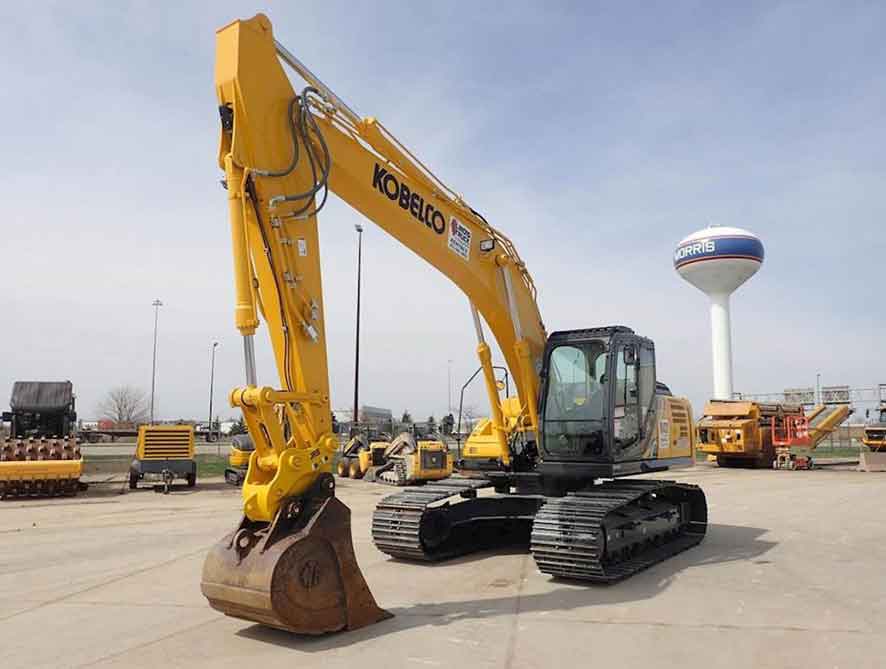
Capacity and Specification Considerations
Choose heavy equipment with a capacity that suits your work needs. For large areas such as runways, use tools with high productivity and the ability to reach long distances.
Rental vs Purchase Evaluation
For short -term projects, The heavy equipment rental system is more efficient than buying. However, Large contractors who often handle similar projects can consider investing in their own equipment to save more in the long term.
Trusted Supplier Partner
Collaborating with trusted heavy equipment providers such as PT Perkasa Sarana Utama (PSU) ensuring you get a well-maintained unit, experienced operator, and fast technical support if problems occur.
Airport construction projects demand high precision, efficiency, and coordination between complex heavy equipment. By choosing the right tool, from the excavator, bulldozers and graders to asphalt pavers and rollers, every stage of construction can proceed according to international safety and quality standards.
To ensure heavy equipment performance is always optimal, Entrust your project needs to PT Perkasa Sarana Utama (PSU). PSU provides complete heavy equipment rental services with routine maintenance, certified operator, and professional technician support. Visit psualatberat.com or direct consultation via WA (WhatsApp) the 0812-5233-3349 or send an email at rent@psualat Berat.com and we are ready to provide the best offer for your airport project.