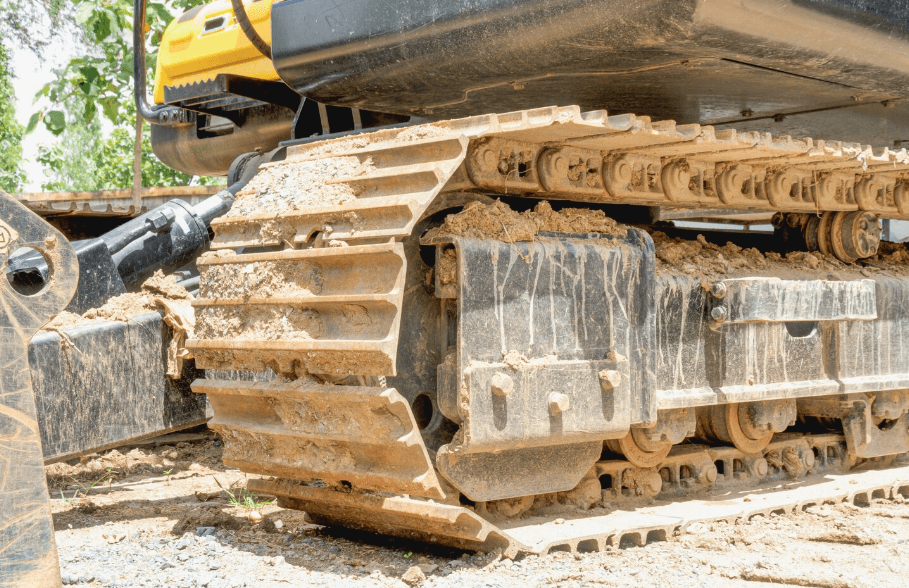
Track excavator what often comes off is not just a technical glitch. In field practice, This incident is one of the main causes downtime which can hamper the project and even increase operational costs significantly.
If you will or are currently using Komatsu PC200 for your project, understand the cause of the release track excavator this will help you anticipate potential operational losses in completing the project.
Starting from the conditions track chain which is loose until alignment Undercarriage which is not precise, This article will not only discuss the causes, but further:
- fully understand the track system
- identify the main cause of loose tracks
- perform a quick diagnosis
- implement effective and efficient solutions
Let's just discuss it.
What's that Track In the excavator?
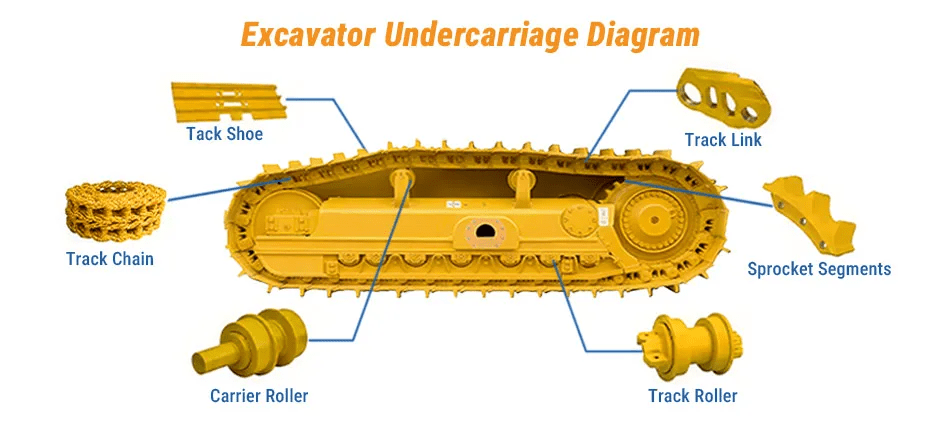
Source: https://www.fridayparts.com/blog/undercarriage-for-excavator
Before we discuss the causes of the release track In the excavator, it is good that we first understand what it is track In the excavator.
Track is part / component undercarriage In the excavator. Track on the excavator is a steel chain system that replaces the wheel and serves to support and move the excavator.
The following is a brief explanation of the function of each component undercarriage In the excavator:
- Track Chain – main chain connecting the system
- Track Shoe – excavator footing
- Track Roller – support the load of the unit
- Carrier Roller – keep the top of the track
- Idler – track director
- Sprocket – main drive track
- Track Adjuster – tension regulator (tension) track chain
Part undercarriage on excavators that often leave usually track chain and track shoe.
The question, what are the causes track chain and track shoe on excavator This PC200 can be released?
Read Also:
- How many tons of weight excavator pc 200? These are the specifications and methods of the rent
- Excavator Recommendations 20 Tons for Various Project Needs
Reason Track Excavator PC200 Often Passes
1. Track Chain Too Loose or Too Tight
This is the most common cause and often occurs due to lack of regular checks.
When track chain too loose, the chain doesn't have enough tension to stay on track roller and sprocket.
Moment excavator turning or going over uneven terrain, track chain will experience a lateral shift (to the side). In this condition, track chain can easily go off track roller.
On the contrary, If track chain too tight, the load will be distributed abnormally throughout the components undercarriage.
This excess pressure can cause:
- sprocket wear out quickly
- pin & bushing track chain loose quickly
- roller experiencing excessive pressure
Within a certain period of time, track chain Too tight can cause changes in the shape and size of the components undercarriage other, so that track chain it is no longer precise and comes off more easily.
The main thing is, tension what is not ideal increases the possibility track chain loose and accelerate component wear undercarriage other.
2. Wear Sprocket and Track Chain
Sprocket functions as a gripping actuator track chain. Under normal conditions, gigi sprocket will fit precisely into the gap chain.
However, over time the intensity of use increases excavator:
- gigi sprocket become sharp or pointed (hooked)
- distance between chains (pitch) Can lengthens due to wear
When this happens, interaction between sprocket and chain no longer perfect. Instead of gripping, sprocket it actually "slips" when turning track.
as a result:
- movement excavator so it's unstable
- chain can ride from the sprocket
- track get out of the lane and let go
This condition often occurs in excavator with high working hours without routine component replacement
Read Also:
- Causes of Excavator Low Power and Solutions
- How to Read Error Codes on Excavators and Tips for Overcoming Them
3. Track Roller or Idler Problematic
Track chain moves on a strip formed by roller and idler.
If track roller stuck or worn out:
- system track not getting equal support
- certain parts of the system track will go down or tilt
If idler not precise:
- speed track will be a little off
- pressure occurs to one side track
In this condition, track no longer walking on the ideal path. Moment excavator move, especially when turning, track will be more easily pushed out or released.
4. Lumpur, Batu, and Hardened Soil
Work environment excavator greatly affects the condition track chain and roller.
Materials like thick mud, big stone and hardened soil can get in on the sidelines undercarriage, especially in areas:
- track roller
- sprocket
- villages track chain
Accumulation of material on undercarriage this can hinder movement excavator as well as:
- change the path of movement track
- force the track out
In extreme conditions, stone wedged in roller or sprocket can cause it directly track up and away.
Here's why excavator requires regular cleaning, especially when used on mining and construction projects.
Read Also:
5. Alignment Undercarriage Not Precise
Alignment means the entire system undercarriage be in a straight and parallel position.
But in long term use:
- frame may experience slight deformation
- position track roller and idler can change
- load distribution becomes unbalanced
The conditions mentioned above can increase the possibility track chain get out of the lane and let go.
Problem alignment This imprecision is often not visible to the naked eye, but the impact is huge.
6. Operational Errors (Human Factor)
Operator factors can also be the cause of the release track excavator. The following operational errors often occur:
a. Sharp Turns on Heavy Terrain
When the excavator makes a sharp turn, especially on hard or rocky surfaces, track experiencing high lateral pressure on one side. This pressure can be pushing track out of line, especially if conditions are not optimal.
b. Operation on Extreme Slopes
On sloping terrain:
- burden excavator not evenly distributed
- one side track receive greater pressure
This condition increases the risk track shift and release.
c. High Speed on Rough Terrain
Rapid acceleration over uneven terrain creates additional vibration and stress on the vehicle undercarriage.
In the long run, This habit can accelerate component wear and increase track risk off.
d. Bucket Crashes Track
One thing that often happens is that the operator accidentally crashes track with bucket which resulted track miss out.
Read Also:
- Komatsu PC200 Bucket Capacity How many m³? These are the complete specifications
- Differences between Long Reach vs Standard Excavators: Function, Advantage, and When to Use
Quick Diagnostic Checklist (5 Minute)
Use this before further action:
- Is the track chain too loose?
- Does the sprocket look worn?
- Is there mud on the roller?
- Is the track not straight??
- Is there any abnormal sound?
If 2-3 answers are "YES", take action immediately.
How Much Firmness Track Excavator the Ideal?
For Komatsu PC200, tension track chain standards generally range between 20–30 mm slack (relaxation).
Tension track chain need to be adapted to working conditions:
– Muddy field / wet
Track chain it needs to be a little looser in muddy or wet road conditions so that the material doesn't pile up and pull chain come out.
– Hard terrain / rocky
Tension track chain needs to be a little firmer in hard and rocky road conditions to maintain stability and reduce vibration.
How to Tighten Track Chain the Loose
Tension track chain arranged via track adjuster, here are the steps
1. Park on a level surface
In order to get measurements slack which is accurate.
2. Lift one side track
Use boom so that the track hangs. Use jack stand or wooden blocks as additional safety if possible.
3. Find it track adjuster
Usually close by idler (the front of the undercarriage).
4. Pump grease use grease gun
Pressure grease will push idler automatic forward tighten the track chain.
5. Double check the track chain slack
Make sure it meets the requirements of the terrain conditions.
6. Lower the unit and test drive slowly
Keep the movement smooth and not too tense.
Additional Tips
– Don't over-tightening because it could be damaging sprocket, roller, pin & bushing track chain
– Always remove mud before adjustment. Because it can make measurement results inaccurate
– Do regular checks, especially after hard work
How to Overcome Excavator Tracks
- Reset tension
- Clean undercarriage
- Replace worn components
- Do alignment check
- Improve operator technique
Routine maintenance can reduce the risk of damage by up to 30–40%.
Loss Simulation If Track Leave
- Downtime: 4–8 jam
- Technician fees: IDR 1–3 million
- Project delays: significant
The most efficient solution: use a well-maintained unit.
Closing
Loose track problems can be prevented. But if you want a solution without risk and without the hassle of maintenance, use an excavator unit that has been optimally maintained.
PT Perkasa Sarana Utama (PSU) present to provide rental services excavator PC200 with well-maintained units, ready for operation, and has gone through daily inspections (P2H) routine. Each unit is supported by regular maintenance according to technical standards, up to risk downtime in the middle of the project can be minimized.
Contact the PT Perkasa Sarana Utama team now for the best deals and unit availability this week.
WhatsApp: 0812-5233-3349
Email: rent@psualatberat.com
Website: psualatberat.com
FAQ
What are tracks on an excavator?
The track is a steel chain system that replaces the wheels and functions to support and move the excavator over various terrains.
Why does the wheel chain on an excavator come off??
Due to several factors such as track saggy, wear and tear sprocket, damage roller, foreign material, and operational errors.
What is the ideal excavator track tightness??
Generally 20–30 mm slack, depending on working conditions and manufacturer's recommendations.
How to tighten a loose track?
By adding grease on track adjuster until it reaches ideal tightness.
Is the excavator track dangerous??
Of, can cause further damage and stop project operations.
How often should the track be checked??
Ideally every day before surgery or after heavy work.