If you are considering it is better to use excavator long reach or excavator standard for your project, There are several conditions that you should pay further attention to.
Many projects appear to be running smoothly but are actually inefficient because type excavator used is not suitable for field conditions.
Differences between excavators long reach (long arm) with standard excavators it's not just about length arm just, but also on:
- Capacity bucket
- Counterweight (counterweight)
- Cycle time and work productivity
This article will help you understand more about:
- Function arm on excavator
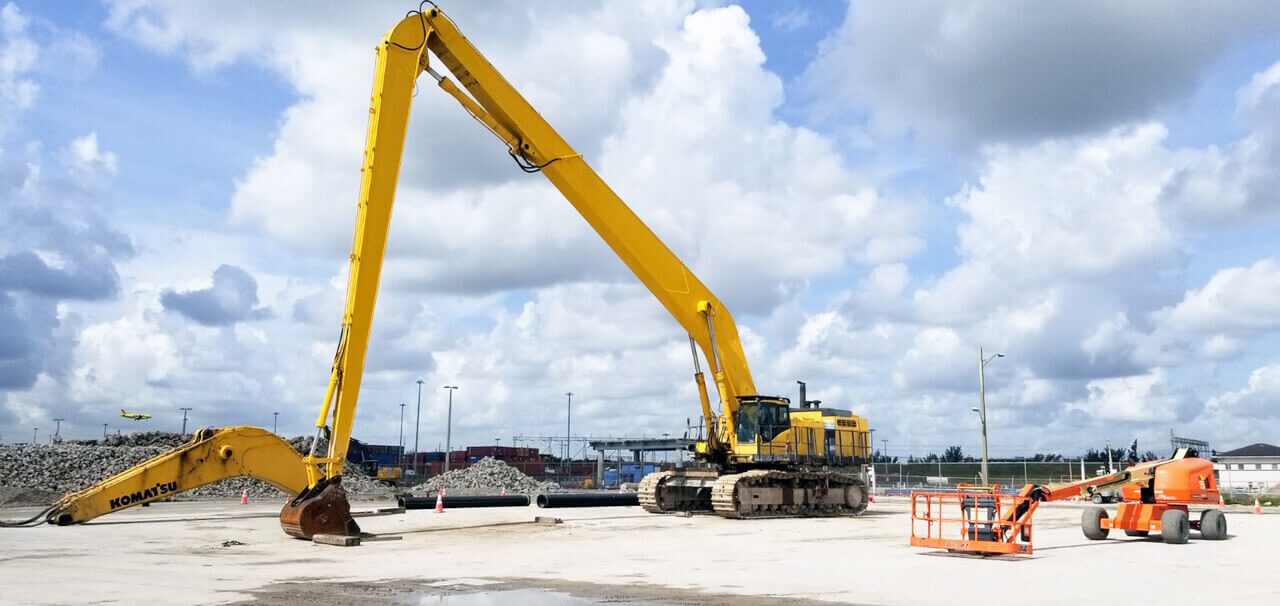
- What's that excavator long reach
- Range and performance differences
- When to use each
- How to choose excavator the most efficient one for your project
Let's just discuss it.
What is the Function Arm on Excavator?
Notes: Need additional editing to highlight the boom part, arm & bucket.
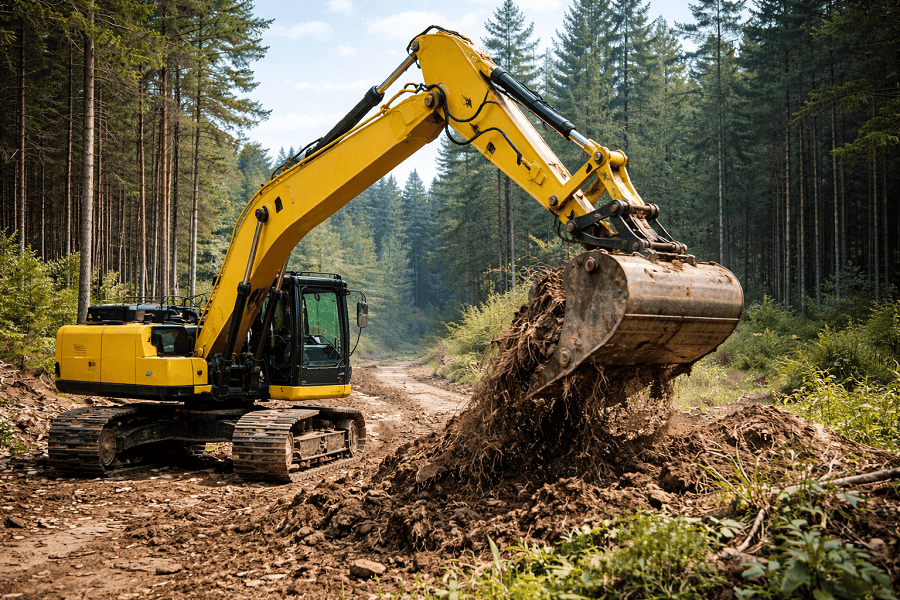
Arm is the connecting part of the excavator arm boom with bucket.
Function arm excavator among others:
- Determine work range
- Control excavation depth
- Arrange precision of bucket movement
The arm design also directly influences it:
- Work productivity
- Fuel consumption
- Tool stability
The longer the arm, the farther the reach. However, the lifting power and stability of the excavator decreases. This is what causes it bucket and counterweight excavator long arm different from excavator standard.
What are the Differences Excavator Standard vs Long Reach?
Below is the overall comparison table standar excavator vs long reach excavator with the same operating weight 20 ton.
| Aspect | Standard Excavator | Long Reach Excavator |
| Horizontal Reach | ± 9 – 10 m | ± 16 – 18 m |
| Vertical Reach | ± 6 – 7 m | ± 9 – 10 m |
| Bucket capacity | 0.8 – 1.2 m³ | 0.3 – 0.6 m³ |
| Counterweight | ± 4 – 5 ton | ± 5 – 7 ton (added or modified) |
| Cycle Time | ± 20 – 30 seconds per cycle | ± 30 – 45 seconds per cycle |
| Hourly Productivity | ± 100 – 180 m³/hour | ± 50 – 100 m³/hour |
| Reposition Tool | Often | Seldom |
1. Job Range (Working Reach)
Both horizontal and vertical, Long-arm excavator has 2x the range further and deeper than standard excavator.
Horizontal reach standard excavator ± 9 – 10 m. Type excavator This is ideal for use in open and easily accessible areas.
Standard excavator will move frequently if the distance to dig and remove material is greater than 10 m.
Meanwhile on long-arm excavator, horizontal range ± 16 – 18 m. Usage long-arm excavator will reduce the process of moving units due to long distances to dig and dispose of material.
Because it has a deeper digging range, long-arm excavator This is more often used for river normalization & dredging.
So, Long-arm excavator used for work with unattainable vertical or horizontal reach standard excavator.
2. Capacity Bucket
With the same operating weight, standard excavator has capacity bucket which is bigger in comparison long-arm excavator.
Capacity bucket standard excavator range 0.8 – 1.2 m³. Whereas long-arm excavator just have capacity bucket around 0.3 – 0.6 m³.
Because it has capacity bucket the greater one, standard excavator capable of transporting larger volumes of material than long-arm excavator.
Standard excavator more likely to have capacity bucket which is big because arm shorter, so as to create leverage smaller than long-arm excavator.
Read Also:
- Excavator Recommendations 20 Tons for Various Project Needs
- Komatsu PC200 Bucket Capacity How many m³? These are the complete specifications
- Tooth Bucket Excavator: Function, Type, and Tips for Choosing the Right One
3. Counterweight
Long-arm excavator own counterweight which is heavier than standard excavator.
This is due to the distance of the load on long-arm excavator further than superstructure / house excavator itself.
Counterweight which is heavier on long-arm excavator this is necessary to maintain stability excavator when lifting and moving materials.
Long-arm excavator own counterweight approx. ± 5 – 7 ton. Whereas standard excavator own counterweight approx. ± 4 – 5 ton.
4. Cycle Time
Standard excavator own cycle time which is faster than long-arm excavator.
This is due to the swing distance / arm movement standard excavator shorter than long-arm excavator.
Estimate cycle time standard excavator more or less 20 – 30 second. Whereas long-arm excavator need 30 – 45 second.
Cycle time long-arm excavator longer because the operator must be more careful in maintaining balance excavator during the process of digging and moving material.
Read Also:
- Heavy Equipment Operators Must Be Certified? These are the duties and conditions!
- Operator Without SIO & Heavy Equipment Without Silo? This is a serious sanction that could hit the company
5. Hourly Productivity
Because it has capacity bucket bigger, productivity per hour standard excavator also become higher than long-arm excavator.
Productivity estimation standard excavator approx. ± 100 – 180 m³/hour. Meanwhile on long-arm excavator productivity ± 50 – 100 m³/hour.
vital Records: Hourly productivity is not the only indicator of project efficiency.
6. Reposition Tool
Usually, standard excavator change positions more often / locations compared long-arm excavator.
This displacement causes fuel consumption excavator increased.
Read Also:
Although long-arm excavator less often reposition, not necessarily the type excavator this is more efficient. Because it is necessary to consider field conditions as well deadline project.
So, how to choose the right excavator for your project?
How to Choose the Right Excavator
Use this checklist:
Choose Standard Excavator If:
- Close working distance (< 10 meter)
- Requires optimal digging power
- Large material volume
- The area is stable and easy to access
Choose Long Reach Excavator If:
- Remote working distance (> 10 meter)
- The risk is high if the tool is too close to the work area
- Lots reposition if using standard excavator
Wrong choice Excavator = Project Loss
Type selection error excavator could cause:
- Longer working time
- Operational costs increase
- Risk of equipment damage
- Security risks increase
vital Records: Type excavator where the rental price is cheaper, not necessarily more economical in total for the project.
Read Also:
- ROI analysis: Which is more profitable?, Heavy Equipment Rental, Buy New or Used?
- It turns out, This 10 Benefits of Heavy Equipment Rental
Solutions from PT Perkasa Sarana Utama
Choose a type excavator The right one doesn't have to be complicated.
PT Perkasa Sarana Utama provide:
- Excavator standard for public works
- Excavator long reach for special needs
- Mini excavator
- Breaker excavator
All units excavator We guarantee it will be well maintained, ready for operation, and has gone through daily inspections (P2H) routine. Each unit is supported by regular maintenance according to technical standards, up to risk downtime in the middle of the project can be minimized.
Contact the PT Perkasa Sarana Utama team now for the best deals and unit availability this week.
WhatsApp: 0812-5233-3349
Email: rent@psualatberat.com
Website: psualatberat.com
FAQ
What is the function of the arm on an excavator??
The arm functions to adjust the range, depth, and precision of bucket movement in the process of digging or moving material.
What is a long arm excavator?
Long arm excavators are excavators with arms longer than standard which are used to reach work areas that are far away or difficult to access.
What is the reach of a long reach excavator?
Generally ranges from 16-18 meters, depending on the size of the unit, almost double that of a standard excavator.
When to use a long reach excavator?
Used when working in remote areas, watery, or high risk like rivers, cliff, and demolition projects.