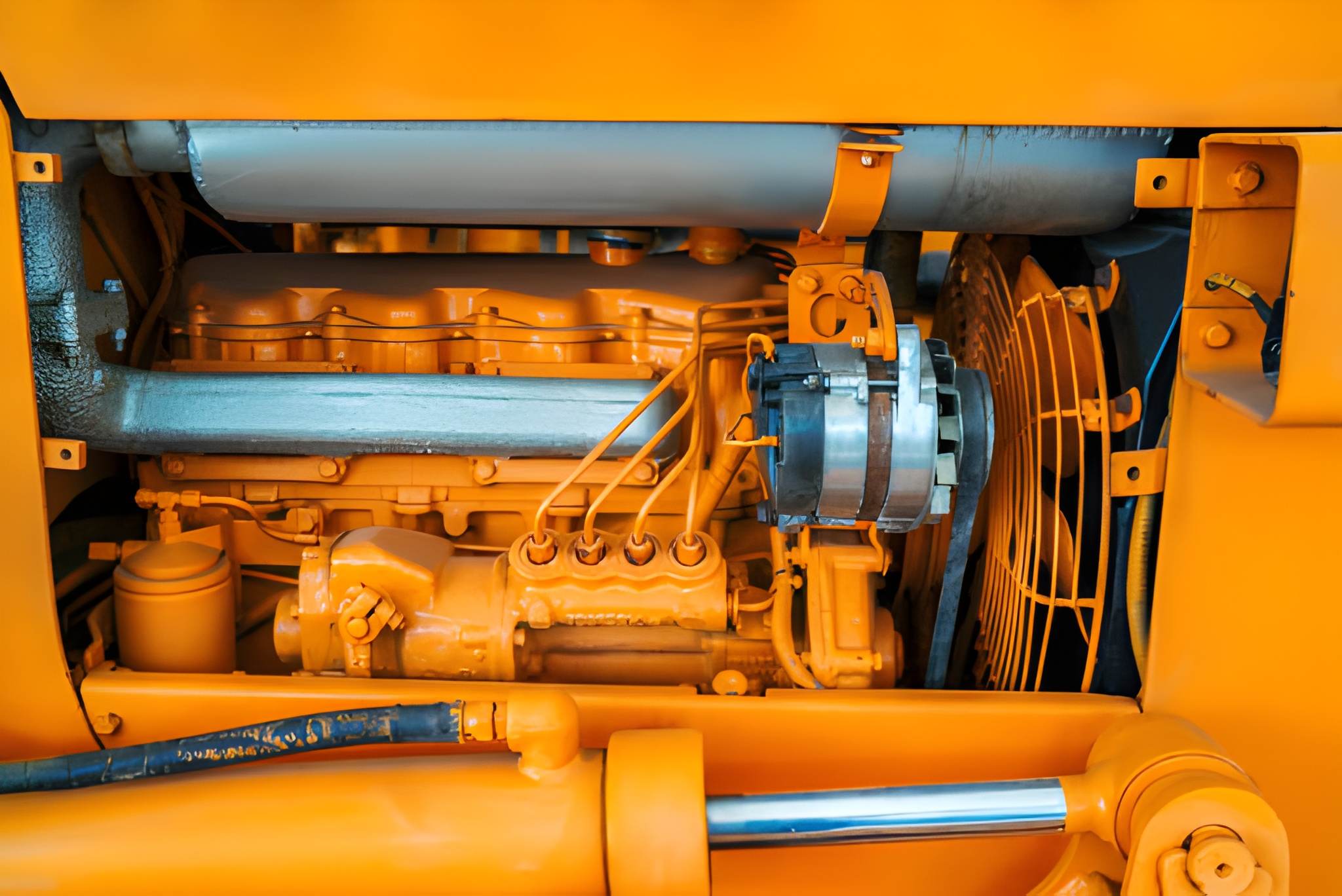
As is the case with other types of motorized vehicles, An alternator is needed to convert mechanical energy from the engine into electrical energy for:
- Charging the battery
- Provides power for electronic systems
- Maintain voltage stability
When the alternator is interrupted or not charging, The entire electrical system of the heavy equipment will depend entirely on the battery which is only temporary.
If you let it drag on, heavy equipment can suddenly stop while working, disrupt the project, and even increase operational costs.
In this article, You will get a complete guide starting from the causes, impact, cara diagnosis step-by-step, to how to repair an alternator that doesn't charge based on some experience in the field.
Let's just discuss it.
What Happens If a Heavy Equipment Alternator Doesn't Work?
When the machine's alternator stops charging, the effect is not felt immediately. But the impact can be very detrimental to you.
If it is not detected early, an alternator that is not charging can cause
- The battery runs out quickly
- The engine is difficult to start
- Sensors and ECU are unstable
- Lights and electrical systems are weak
- The machine stops suddenly during operation
System charging a failure can cause voltage instability that has a direct impact on performance engine and electronic control systems.
If you are working on a project, downtime 1 heavy equipment units alone can cause losses of millions of rupiah per hour.
So that it is easier for you to detect and estimate possible heavy equipment damage, You need to know the cause of the alternator not charging.
What are the causes??
Causes of Heavy Equipment Alternator Not Charging
To make it easier to understand, You need to know the working principle of alternator on heavy equipment.
The alternator produces electricity if:
- The rotor rotates at sufficient speed
- The magnetic field is formed stably
- The resulting current can be directed and controlled
If any of these processes are interrupted, for output electricity will drop or even be zero.
1. V-Belt Saggy, Out of, or Disconnect
The alternator works based on rotation pulley which is driven by a machine through a belt.
Technically, voltage output alternator proportional to the rotation speed of the rotor.
If V-belt saggy slippage will occur which results Revolutions Per Minute (RPM) alternator down.
Then when the RPM falls below the threshold it will cause the resulting voltage to not reach the level charging.
as a result:
- Output can be only 11–12V (not enough for charging the battery)
- The battery does not charge even when the engine is on
V-belt Loose or worn ones are often found on heavy equipment that has a high workload and is often exposed to intense vibrations in the field.
2. Carbon Brush Out of
Brush functions to channel electric current to the rotor to form a magnetic field (excitation current).
Technically:
- The rotor needs DC current to produce a magnetic field
- Brush is the link between the regulator and slip ring
If brush out of:
- Electrical contact becomes weak or broken
- Excitation current does not flow to the rotor
- The rotor does not produce a magnetic field
Without a magnetic field, there will be no electrical induction on stator. This condition causes the alternator to not produce any output at all.
3. Defective Voltage Regulator
The regulator controls the amount of current entering the rotor.
Technically, The regulator reads the output voltage and then adjusts the excitation current so that the voltage is stable
If the regulator is damaged:
Condition 1: Does not send excitation current
- The rotor is not magnetized
- The alternator does not produce electricity
Condition 2: Sending current is too small
- Weak magnetic field
- Low output voltage (undercharging)
These two conditions will result in the battery only being partially charged or not even charged at all.
4. Rectifier (Diode) Damaged
The alternator produces AC current, while the battery requires DC current. Rectifier functions to convert AC current from the alternator into DC current for the battery.
If rectifier (diode) damaged, the current is not filtered perfectly so output be half-wave or even leak.
The impact of the damage rectifier (diode) heavy equipment:
- The voltage drops drastically
- Insufficient current for charging
- It could also cause ripple (unstable current)
Additional notes:
The alternator still “produces electricity”, But not usable to charge the battery.
5. Loose Cables or Connections
In the electrical system, resistance is very influential.
Technically, Loose or rusty cables can increase resistance so that the voltage drops before it reaches the battery.
Example:
- Output alternator: 28V
- Up to the battery only 25V because of a drop
This condition causes:
- The system reads as if the alternator is weak
- The battery is not optimally charged
Wiring system This heavy equipment needs to be checked frequently, considering the working conditions of heavy equipment which are often exposed to high vibration and environmental exposure (water and dust) which can cause corrosion.
6. Extreme Work Environment (Dust, Lumpur, Air)
The alternator has many exposed components such as:
- Bearing
- Slip ring
- Brush
These components, risk of exposure:
- Dust which accelerates brush wear
- Air which causes corrosion in the connections
- Lumpur which inhibits cooling
If it is not cleaned immediately and left to pile up:
- Electrical resistance increases
- Unstable contact
- Overheating
The conditions mentioned above can cause a decrease or loss of alternator output.
7. Overload Electrical System
The alternator has maximum capacity (ampere output). If the heavy equipment's electricity demand exceeds the capacity of the alternator, voltage will drop Because supply not enough.
Besides that, the regulator will work harder and the alternator temperature will increase. This condition will increase the possibility of damage diode and also stator.
In some cases, The alternator continues to work despite the electrical system overload. However, output produced is not enough for charging because all the power is used up for the active load.
How to Find Out if a Heavy Equipment Alternator is Damaged
Before the heavy equipment unit completely shuts down due to a damaged alternator, Usually there are the following signs:
- Indicator battery light up
- Battery voltage is unstable
- The battery often fails
- The lights dim when the engine is running
- Abnormal noise from the alternator
Read Also:
- How to Read Error Codes on Excavators and Tips for Overcoming Them
- ROI analysis: Which is more profitable?, Heavy Equipment Rental, Buy New or Used?
- Types of Heavy Equipment Rental System
Alternator Measurement Standards
For a more accurate diagnosis, use the following multimeter:
- 12V system : 13.8 – 14.5V
- 24V system : 27 - 28V
- Drop voltage maximum : < 0.5V
- Rotor resistance : ±2–6 ohm
This data is used in practice troubleshooting and system references charging automotive.
Flow Troubleshooting Alternator Not Charging
To check the condition of your heavy equipment alternator in the field, use the following flow:
1. Turn on the machine
↓
2. Check battery voltage
↓
3. Does the voltage comply with standards??
↓ OF
4. Check condition V-belt
↓
5. What are the conditions V-belt normal?
↓ OF
6. Check output alternator
↓
7. Whether output low?
↓ OF
8. Check regulators & brush
↓
9. If damaged → service or replace alternator
With this flow, You can avoid wrong diagnoses which can result in losses in your project operational costs.
How to Deal with a Malfunctioning Heavy Equipment Alternator
After finding the cause, do the following steps:
1. Repair or Replace Belt
Make sure the voltage belt (belt tension) fits well and has no cracks or wear.
2. Clean and Tighten Connections
Remove rust and ensure connections are solid or tight.
3. Internal Component Service
If the problem is with the brush, regulator or diode, do more overhaul alternator.
4. Replace the alternator if it gets worse
If the damage is complete, alternator replacement would be more efficient to avoid downtime repeated.
vital Records:
Alternator problems are often not just a matter of age, but a combination of environment and maintenance which is less than optimal.
Frequently Occurring Mistakes
We collected several errors that often occur in the field based on several research publications and discussions on the internet:
- Replacing the battery without checking the alternator
- Tighten belt too loud
- Ignore the battery indicator
- Not carrying out routine checks
Tips Preventive Maintenance Alternator
According to several research publications, Preventive maintenance can reduce damage by up to 30–40%.
Here are some practical steps preventive maintenance to avoid damage to your heavy equipment alternator:
- Check the belt every 250–500 working hours
- Clean the alternator area
- Check the electrical system periodically
- Avoid electrical overload
- Perform regular inspections
Conclusion
A heavy equipment alternator that is not charging is a serious problem that can have a direct impact on project operations.
By understanding the causes, symptom, proper diagnosis and treatment methods, You can:
- Avoid downtime
- Save costs
- Maintain heavy equipment productivity
Find other interesting articles that discussing topics related to heavy equipment on the website PT Perkasa Sarana Utama (PSU).
If you are going to work on a project but don't have heavy equipment that is maintained and ready to use, PT Perkasa Sarana Utama (PSU) present to provide services rent various heavy equipment with well-maintained units, ready for operation, and has gone through daily inspections (P2H) routine. Each unit is supported by regular maintenance according to technical standards, up to risk downtime in the middle of the project can be minimized.
With the support of a reliable fleet and experienced team, PSUs help ensure work in the field runs more safely, efficient, and on time. Come contact us here!
WhatsApp: 0812-5233-3349
Email: rent@psualatberat.com
Website: psualatberat.com.