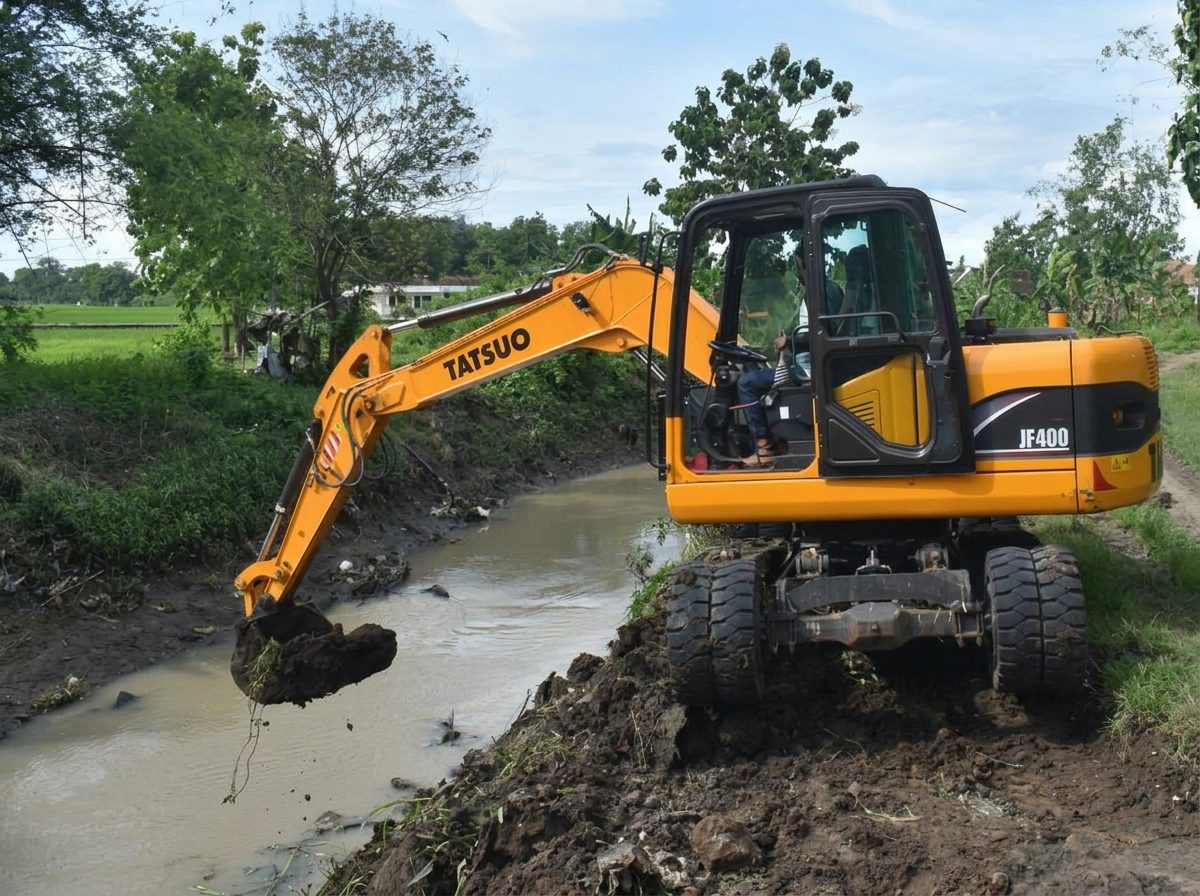
River sedimentation is one of the main causes of decreasing water flow capacity. When the mud, pasir, rubbish, and sediment material continues to accumulate in the river bed, waterways become narrower and the risk of flooding increases.
Because of that, River dredging is an important process in the river normalization project, flood control, canal maintenance, to the management of industrial areas and ports.
Muddy terrain conditions, limited work access, water flow speed, to the volume of material, the river dredging process requires different work methods and heavy equipment.
Apart from discussing the type of heavy equipment used, this article will also provide you complete information about:
- River dredging methods
- the function of each tool
- excavator attachments for dredging
- how to select tools based on project conditions
- safety factors in river dredging operations
By understanding these aspects, We hope that the dredging project decision-making process can be carried out more precisely and efficiently.
What is River Dredging?
River dredging is the process of removing sedimentary material from the river bed to restore water flow capacity or reach a certain depth according to project needs.
Material dredged from the river bed can be::
- lumpur
- pasir
- sedimentary soil
- gravel
- vegetation
- rubbish
- other organic materials
On the river normalization project, Dredging is usually carried out to increase water flow capacity so that the risk of flooding can be reduced.
While in the canal and port area, Dredging is carried out to maintain the depth of the waterway so that operational activities of boats and ships continue to run safely.
Because river conditions and the type of sedimentation can be different in each location, dredging methods and heavy equipment used It also needs to be adapted to project needs.
River Dredging Methods that Need to be Understood Before Choosing Tools
Before determining the heavy equipment, You need to first understand the dredging method used in the project.
River dredging is divided into two main methods, that is mechanical dredging and hydraulic dredging.
Mechanical Dredging
Mechanical dredging is a method of dredging using mechanical tools like excavator, clamshell, or dragline to take sediment directly from the river bed.
This method is usually used on:
- shallow river
- areas with access to equipment from land
- river normalization project
- relatively dense sedimentation
The advantage of this method lies in the flexibility of the tool and ease of mobilization in the field.
Hydraulic Dredging
Hydraulic dredging uses a pump system to suck up sedimentation material in the form of slurry or a mixture of mud and water.
This method is widely used in:
- large volume dredging
- river deepening
- canal dredging
- high amounts of mud sedimentation
The most common tool used in this method is a cutter suction dredger which works using a cutter head and a slurry pump system..
Because it involves a pipeline, pump, and disposal areas, Hydraulic dredging usually requires a more complex operational system than mechanical dredging.
Types of Heavy Equipment Used in River Dredging Projects
After understanding the dredging method, The next step is to identify the heavy equipment used in this river dredging project.
Each tool has a different function. Because of that, the selection needs to be adjusted to the character of the river and the project work targets.
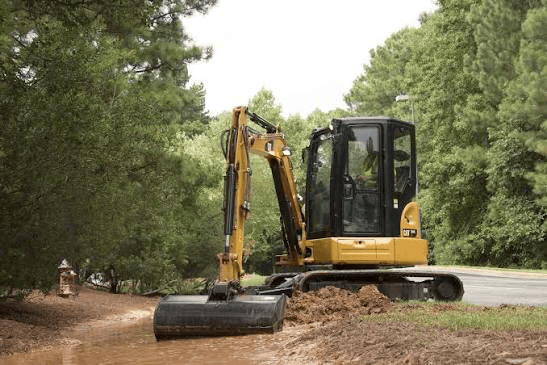
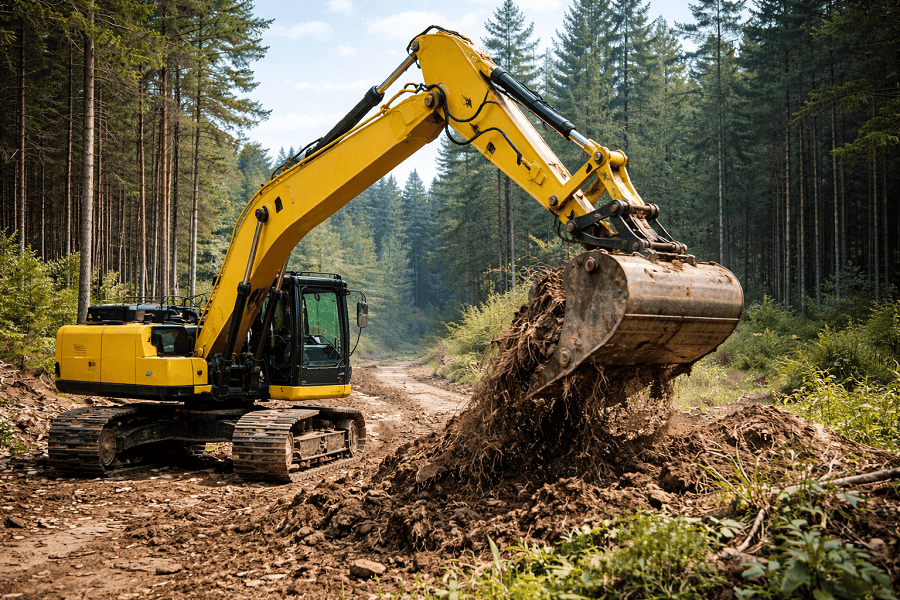
Excavator Long Arm
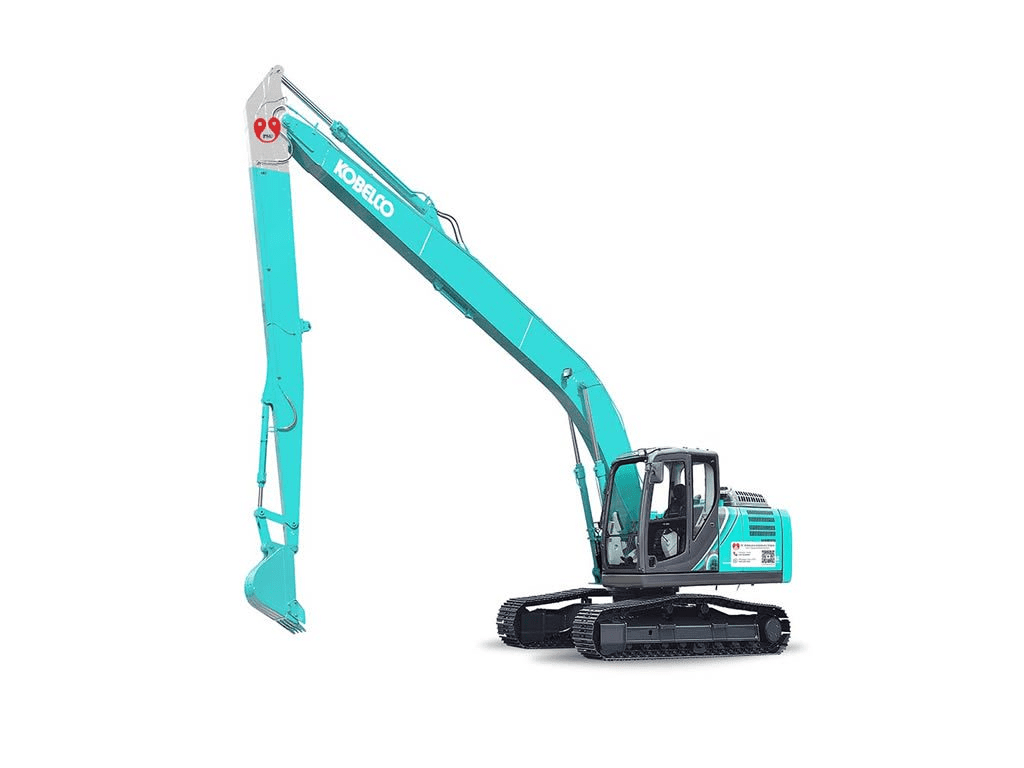
Excavator long arm is one of the tools most often used in river dredging projects.
This tool has a longer boom and arm compared to standard excavator so that it can reach the river bed from land areas.
The longer working range makes long arm excavators suitable for project needs:
- river normalization
- dredging irrigation canals
- light to medium sedimentation cleaning
In a river dredging project, This tool is more often chosen because it is relatively easier to mobilize and can work without having to be too close to river banks which are prone to landslides.
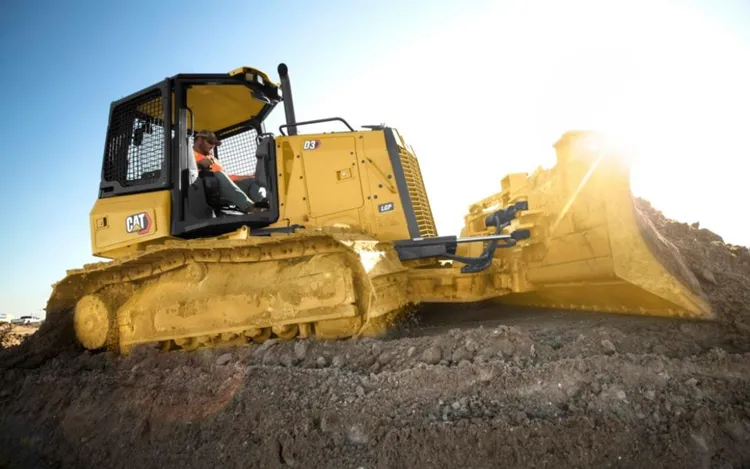
Bulldozer
In river dredging projects with large volumes of material, bulldozer useful for leveling the disposal area so that the mobilization of the dump truck is not disturbed.
Furthermore, This bulldozer can also be used to open work access before the river dredging project begins. Before other tools work, bulldozers work for:
- open road access
- flatten the ground
- clear the bushes
- compact the work path
Dump Truck
Dump trucks are used to transport dredged materials to disposal areas or certain storage locations.
In a river dredging project, dump trucks are usually used for:
- transporting dredged mud
- move sedimentary sand
- hauling material disposal
In several river dredging projects, The material dredged by the long arm excavator is directly loaded into the dump truck. This sometimes causes problems in the form of roads that become dirty and slippery because mud water drips from the truck bed.
Ideally, The dredged material needs to be dried first by leveling it with a bulldozer. If it's dry, it's safer to load into a dump truck.
Cutter Suction Dredger (CSD)
Cutter suction dredger or CSD is used in river dredging projects with large sedimentation volumes and certain depth targets.
This tool works using a cutter head to destroy sedimentation, then the material is sucked using a pump to the disposal area via a slurry pipeline.
CSD is widely used for:
- river deepening
- river channel maintenance
- dredging large volumes of mud
- large scale dredging projects
Because the working system uses a slurry pump, CSD operations typically involve:
- on point
- slurry pipeline
- disposal pond
- pompa slurry
Using this tool requires careful operational planning so that the dredging process runs optimally.
Pontoons and Barges
On certain river dredging projects, Heavy equipment needs to be placed on a pontoon or barge so that it can work in the middle of the river flow.
The pontoon serves as a floating platform for support:
- excavator
- crane
- clamshell dredger
- dredging system
Pontoon stability is an important factor because it is directly related to the load distribution of the equipment, river flow, and operational safety during dredging.
Clamshell Dredger
Clamshell dredgers use a claw-shaped bucket to pick up material from the river bed.
This tool is usually installed on a crane on a pontoon and is used in areas that require more precise dredging.
Clamshell dredger is suitable for:
- dredging near the bridge
- narrow area
- dredging near concrete structures
- vertical dredging
Because the bucket moves vertically, operators can control the dredging area in more detail than some other dredging methods.
Excavator Bucket For River Dredging
Selection of attachments / bucket excavator also greatly influences the effectiveness of dredging in the field.
The type of attachment used is usually adjusted to the sedimentation characteristics and project work methods.
Mud Bucket
The mud bucket has a wider design than a standard bucket so it is suitable for collecting soft mud and light sedimentation.
This attachment is commonly used on:
- cleaning of waterways
- light mud dredging
- river maintenance
Dredging Bucket
Dredging buckets are specially designed for dredging rivers and canals.
The shape is longer (Long-Bottom Profile) so it is more effectively used to collect sedimentation at the bottom of the river.
Clamshell Bucket
Clamshell buckets are used for vertical dredging and areas that are difficult to reach with ordinary buckets.
This attachment is suitable for use:
- deep mud dredging
- dredging near structures
- areas with limited access
How to Choose Tools Based on River Conditions?
The selection of heavy equipment in a river dredging project needs to be adjusted to field conditions and work targets.
Because of that, Each river condition usually requires a different operational approach.
If the river is shallow and easy access
Long arm excavators are generally quite effective in use because they can work directly from land with simpler mobilization.
If the volume of sedimentation is very large
On projects with large volume dredging targets and long work duration, Using a cutter suction dredger is usually more economical in operational terms because the dredging process can be carried out continuously.
If the dredging area is narrow and requires precision
The clamshell dredger is a more appropriate choice because the dredging control is more detailed and can be used effectively in areas near certain structures.
If the Disposal Area is Difficult to Manage
Bulldozers and dump trucks need to be prepared with adequate capacity so that the distribution of dredged material does not hamper project productivity.
Safety Factors that are Often Ignored in River Dredging
Apart from tool productivity, The safety factor is also an important part that you need to pay attention to when working on a river dredging project.
Some risks that often arise when working on river dredging projects include::
- abrasive tool
- cliff landslide / riverside
- the pontoon is unstable
- tool slips
- the river current is too strong
- disposal area overload
Therefore, before the project starts you need to do some analysis on:
- soil conditions
- depth
- carrying capacity of the work area
- river flow
- access to tool mobilization
Planning the right tools and work methods helps reduce operational risks during the project.
PT Perkasa Sarana Utama Provides Heavy Equipment for River Dredging Projects
In a river dredging project, The readiness of heavy equipment greatly determines the smooth running of work in the field.
PT Perkasa Sarana Utama rent out various heavy equipment for river dredging project needs with good unit condition, well maintained, and ready to operate. Starting from excavator, long arm excavator, until bulldozer.
By using the right tools, River dredging projects can run more safely, efficient, and according to operational targets.
Conclusion
River dredging requires work methods and combinations of heavy equipment that are adapted to field conditions, type of sedimentation, as well as project work targets.
Mechanical dredging is more flexible for use in river normalization projects and areas with adequate land access. Meanwhile, hydraulic dredging is more effective for dredging large volumes with a slurry system.
Selection of tools such as long arm excavators, cutter suction dredger, clamshell dredger, bulldozer, dump truck, to pontoons need to consider river conditions and overall project operational needs.
The more precise the tools used, the more efficient the dredging process will be.
If you need heavy equipment for a river dredging project, The PT Perkasa Sarana Utama team can provide recommendations that are right for your project needs.
Quick contact the PT Perkasa Sarana Utama team right now for the best offers and unit availability this week.
WhatsApp: 0812-5233-3349
Email: rent@psualatberat.comWebsite: psualatberat.com