If you are working on a construction or road repair project, Your understanding of the types of asphalt materials and mixtures is very important before starting the project.
Because, The asphalt mixture should ideally be adjusted to the function of the road you are working on. Starting from the residential neighborhood road, city street, industry, to the toll road, each has a different function so the asphalt mixture needs to be adjusted.
Mistake in choosing the type of mixture, working method, or the quality of the material can cause the road project you are working on to crack more quickly or even have holes.
Because of that, This article will discuss more fully and practically regarding:
- asphalt making material
- type of asphalt mixture
- type of asphalt used in Indonesia
- road asphalting stages
- causes of rapid road damage
By understanding the relationship between materials, working method, and field conditions, We hope that project owners and contractors can determine a more appropriate and long-lasting asphalting solution.
What material does asphalt come from??
In general, Asphalt comes from two main sources, namely:
- petroleum processing products
- natural asphalt
In Indonesia, The most widely used materials are oil asphalt or petroleum asphalt. This asphalt comes from heavy residue resulting from crude oil refining at the oil refinery. After petrol, solar, and other light products are separated, you will be left with a dark black material called bitumen or asphalt binder.
Bitumen is the main binder in the asphalt road mix.
The properties of bitumen are very important because of this material:
- capable of bonding aggregates
- resistant to water
- quite flexible to temperature changes
- able to help absorb vehicle pressure
Apart from oil asphalt, Indonesia also has The famous natural asphalt source is Buton Asphalt (Asbuton) from Buton Island, Southeast Sulawesi.
Asbuton is formed naturally through geological processes over millions of years and contains natural bitumen mixed with rock minerals.
According to publications from the Ministry of Public Works, Asbuton has great potential as an alternative to reducing dependence on imported asphalt because it has good adhesion and stability characteristics in tropical climates.
What are the materials used to make road asphalt?
In road construction, Asphalt is a combination of several materials mixed to form a strong and stable pavement layer.
These materials include bitumen or asphalt binder, rough aggregate, fine aggregate, until filler.
Bitumen or Asphalt Binder
Bitumen is the main binding material which glues all the aggregates to the asphalt mixture.
The function of bitumen is not just as an adhesive, but also help the way:
- not easy to crack
- more flexible
- more resistant to water
- able to adjust to temperature changes
The characteristics of bitumen greatly determine the life of the road. If the bitumen is too hard, roads are easier to crack. On the contrary, if it's too soft, The road surface becomes more bumpy when subjected to heavy loads and high temperatures.
Because of that, Highways in Indonesia generally use penetration grade bitumen 60/70 which is considered most suitable for tropical climate conditions.
Coarse Aggregate
Coarse aggregate usually in the form of stone fragments of a certain size. Its main function is to support the weight of vehicles that land on the road surface.
In road construction, rough aggregate be the main structure that determines the strength of the road surface. Because of that, The quality of the stone is very important. Stone with a high level of abrasion breaks more easily so the road becomes damaged more quickly.
Fine Aggregate
Fine aggregates such as sand or stone chips (stone dust) serves to fill the voids between coarse aggregates so that the mixture becomes denser and more stable.
Filler
Asphalt filler is usually a material semen, kapur, or mineral filler with a very fine size.
The use of filler in road construction serves to:
- increase the density of the asphalt mixture
- strengthens the binding capacity of asphalt
- reduce air spaces
Air cavities on the road surface that are too large can make it easier for water to enter the road layer and accelerate damage.
Types of Asphalt Mixtures
After understanding the materials that make up asphalt, the next step is to understand how these materials are mixed and used on road projects.
In road construction, Asphalt is used in the form of a mixture of the various materials above and the composition is adjusted to the functional needs of the road, vehicle traffic, environmental conditions, and target road age.
Hot Mix Asphalt (Hotmix Asphalt)
Hotmix is the type of asphalt mixture most commonly used in Indonesia. Hot Mix Asphalt (HMA) or hotmix asphalt comes from a mixture of bitumen, aggregates and fillers that are heated to a temperature of ± 140-160°C and spread to form the road layer.
Hotmix is ideally used to form road layers, among other things:
- AC-WC (Asphalt Concrete – Wearing Course) as a layer of road surface that is in direct contact with vehicle tires
- AC-BC (Asphalt Concrete – Binder Course) as a binding layer between the road surface and the foundation layer
- AC-Base (Asphalt Concrete – Base Course) as the main foundation layer of asphalt structures
Hotmix asphalt is often applied to structures:
- city street
- national road
- toll road
Cold Mix Asphalt
Cold mix asphalt (CMA) is a mixture of aggregate and liquid asphalt without needing to be heated. Usually, CMA uses asphalt emulsion or cutback asphalt which can be mixed directly with the aggregate.
This cold mix asphalt is usually used for:
- Temporary road patch
- emergency repair
The main advantage of cold mix asphalt is that it is more practical and quick to apply. But technically, Cold mix generally has lower durability than hot mix for long-term use.
Stone Matrix Asphalt (SMA)
Stone Matrix Asphalt (SMA) designed for roads with heavy traffic and high vehicle intensity.
This stone matrix asphalt mixture has:
- dominance of coarse aggregate
- higher bitumen content
- better deformation resistance
Stone matrix asphalt is often used in:
- toll road (especially the slow lane which is often used by vehicles heavy duty)
- logistics area
- port area
- heavy industrial road
The main advantage of stone matrix asphalt is its ability to withstand rutting or road waves caused by heavy vehicle pressure.
Types of Asphalt Suitable for Various Projects
Each road project requires a different type of mix. Mixture selection is usually taken into consideration:
- vehicle volume
- vehicle load
- weather conditions
- target road age
- construction costs
The following is a simple illustration of the use of asphalt types in the field.
| Type of project | Commonly Used Types of Asphalt | Reason |
| Residential street | Hotmix AC-WC | Smooth surface and economical |
| Temporary road patch | Cold mix asphalt | Practical and quick to apply |
| Industrial road | SMA | More resistant to heavy loads |
| Toll road | Combination of Hotmix and SMA | Stable for high traffic |
| Parking area | Standard hotmix | Efficient and strong enough |
| Logistics road | SMA or polymer modified asphalt | Reduces potential deformation |
Practical insight like this is important because a lot of road damage actually occurs due to the use of mixtures that are not suitable for field conditions.
How the Road Paving Process is Done?
After choosing the right type of asphalt, Road quality is also greatly influenced by the work process in the field.
In many cases, Roads get damaged quickly, not because the material is bad, but because the construction stages were not carried out properly.
In general, The road asphalting process consists of several stages.
1. Subgrade Preparation and Compaction
The first stage is to ensure that the subgrade has sufficient supporting capacity.
If the base soil is weak or not well compacted, The road layer above it will crack and wavy more easily.
Because of that, process land compaction use Vibro Roller very important in the early stages of a road project.
2. Base Course Installation
Once the base soil is stable, an aggregate foundation layer is installed to help distribute the vehicle's load.
This layer becomes the main foundation before the hot mix is spread.
3, Hotmix Asphalt Spreading
The hotmix mixture is spread using an asphalt paver at a temperature of 110–140°C.
Temperature conditions are very important because asphalt that is too cold will lose its ability to bond the aggregate optimally.
This is the reason for the distance between the Asphalt Mixing Plant (AMP) and the location of the project greatly influences the quality of the road.
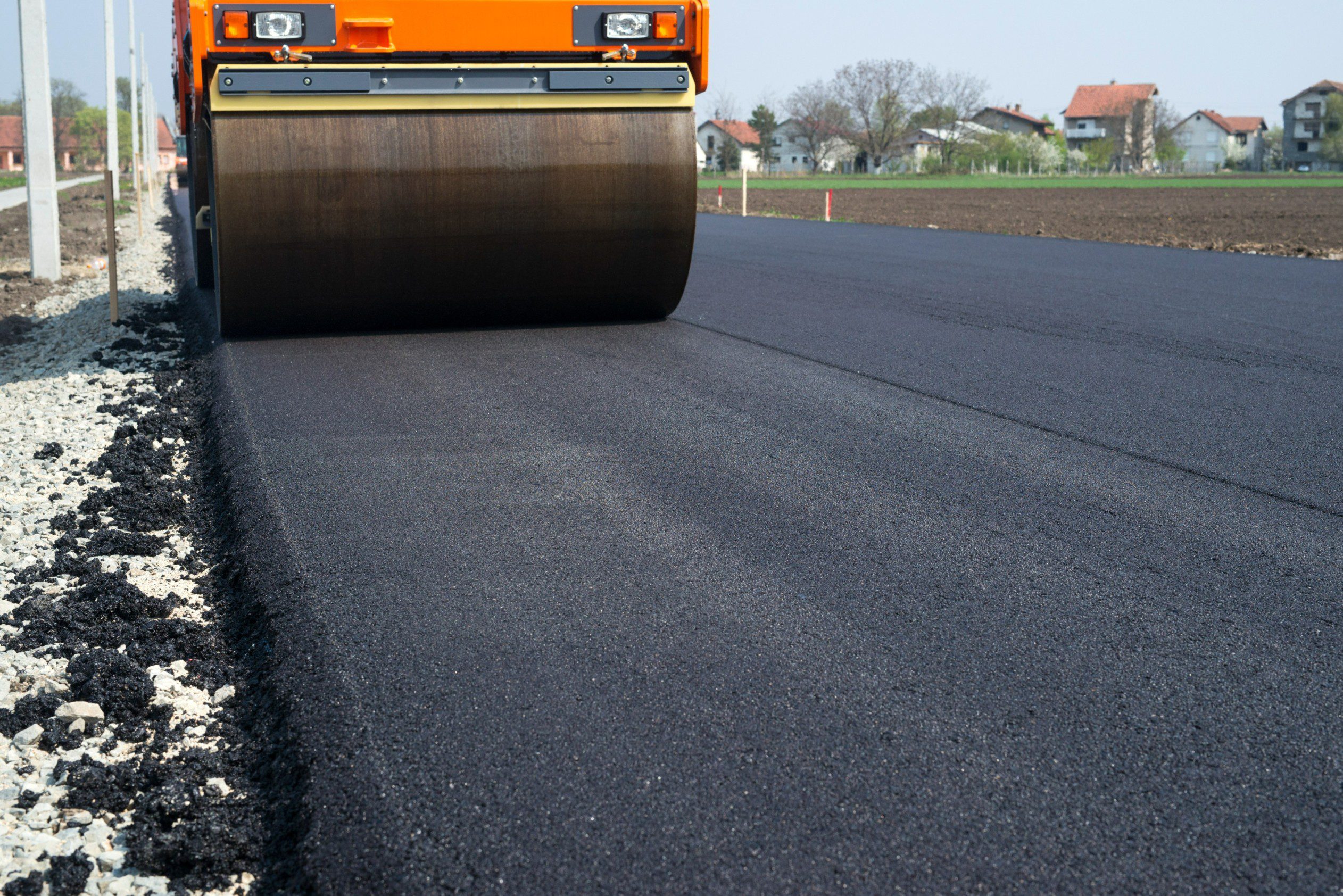
4. Asphalt Compaction
After spreading is complete, asphalt is compacted using a Pneumatic Tire Roller or Tandem Roller.
Purposeful compaction:
- reduce air spaces
- increase density
- Strengthens the bond between materials
If compaction is not optimal, water will more easily enter the road layer and accelerate damage.
Why Asphalt Roads Can Be Damaged Quickly?
Choosing the right type of asphalt is actually not enough. Many roads still experience premature damage even though quality materials are used.
This is usually influenced by a combination of workmanship factors, drainage, to vehicle load.
Poor Drainage and Waterlogging
Water is one of the main causes of damage to asphalt roads.
When water enters the cavity of the road layer, The binding force between bitumen and aggregate begins to weaken. Over time the aggregate loosens and holes appear on the road surface.
Because of that, Roads with poor drainage usually deteriorate more quickly even when using high quality hot mix.
Vehicle Overload
Vehicle loads that exceed the design capacity of the road can cause:
- deformation
- cracked due to frequent overloaded vehicles
- bumpy road
This problem often occurs on industrial roads and logistics routes.
Compaction Not Maximum
Compaction greatly determines the life of the road.
If road density is not achieved, The air cavity is too large and water can more easily enter the pavement layer.
as a result, walk faster:
- crack
- perforated
- wavy
Incorrect Asphalt Spreading Temperature
Hotmix asphalt must be spread in a temperature range of 110–140°C.
If the temperature is too low:
- bitumen does not completely cover the aggregate
- bonds between materials weaken
- the risk of cracking increases
Because of that, Temperature control is becoming an important part of a professional paving project
Conclusion
Asphalt is the main material for road construction which comes from petroleum processing residues and natural sources.
In practice, Asphalt is used together with aggregate and filler to form a strong and durable road layer.
Types of mixtures such as hotmix, cold mix, and Stone Matrix Asphalt has different functions depending on project needs and vehicle load.
However, road quality is not only determined by material. Work process, compaction, drainage, and temperature control also greatly influences road life.
Because of that, a good road project requires a combination:
- the right material
- correct construction method
- optimal compaction
- suitable heavy equipment
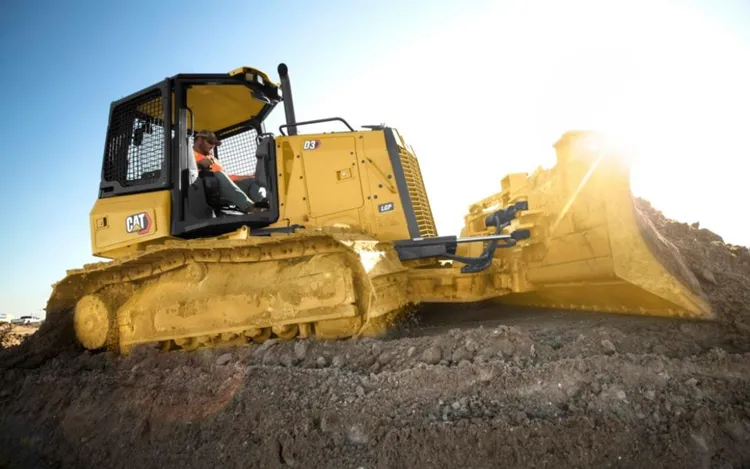
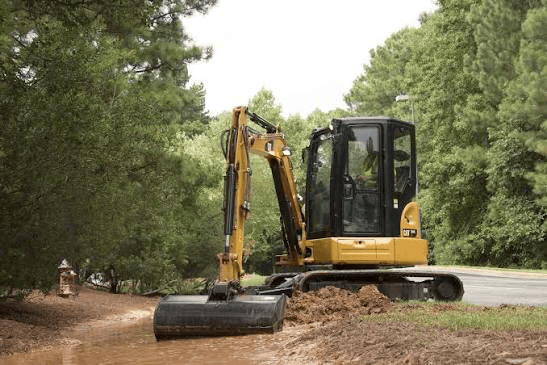
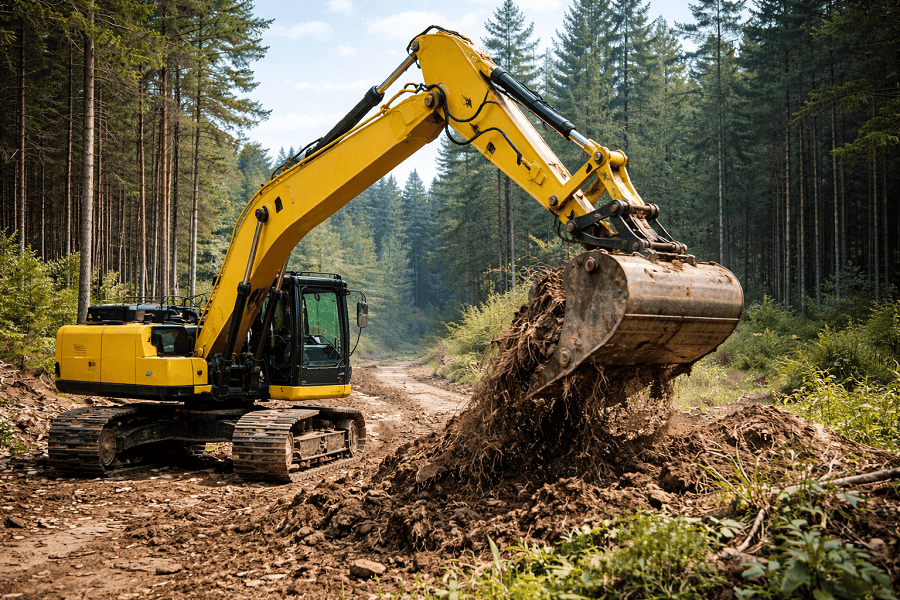
To support road construction projects, PT Perkasa Sarana Utama provide equipment rental heavy like Excavator, Bulldozer, and Vibro Roller for various infrastructure and road paving work needs.
Each unit is supported by regular maintenance according to technical standards, up to risk downtime in the middle of the project can be minimized.
Contact the PT Perkasa Sarana Utama team now for the best deals and unit availability this week.
WhatsApp: 0812-5233-3349
Email: rent@psualatberat.com
Website: psualatberat.com
FAQ
What is the main ingredient in making asphalt??
The main ingredient in asphalt is bitumen which comes from petroleum processing residues or natural sources such as Buton Asphalt.
What is the difference between hot mix and cold mix??
Hotmix is processed using high temperatures and has better durability, while cold mix is more practical for temporary road patches.
Why do asphalt roads get potholes so quickly??
The main cause is usually poor drainage, vehicle overload, compaction is less than optimal, or inappropriate mix quality.
Do all the roads use hotmix?
No. Some projects use cold mix, Stone Matrix Asphalt, or even concrete roads depending on traffic needs and field conditions.
Asphalt or concrete roads are more durable?
Concrete roads are generally more resistant to heavy loads and puddles. However, asphalt roads are more comfortable, done faster, and easier to repair.
What is the function of Vibro Roller in road projects??
Vibro Rollers are used to compact soil and asphalt layers so that the density meets specifications so that the road is more durable.