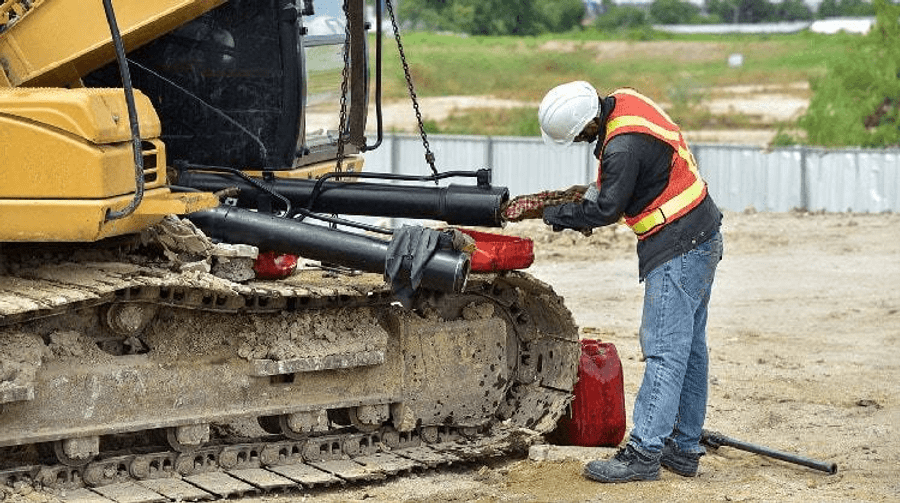
Have you ever imagined the losses that must be borne when an excavator unit suddenly breaks down in the middle of a construction project that is being completed? Downtime or operational downtime is not just a technical problem, but rather a real financial loss. Ongoing rental costs, operators' salaries must still be paid, until the project deadline is in danger of being missed is a bitter consequence.
Carrying out regular maintenance on heavy equipment starts with a simple but crucial daily routine. This procedure aims to detect potential minor damage early before it develops into fatal damage that requires heavy equipment repair services at exorbitant costs. By checking every morning, You ensure work safety for operators and the surrounding environment. The following 7 steps you need to pay attention to when carrying out daily heavy equipment maintenance so that your fleet is always in combat-ready condition.
1. Perform a Visual Inspection Around the Unit (Walk-around Inspection)
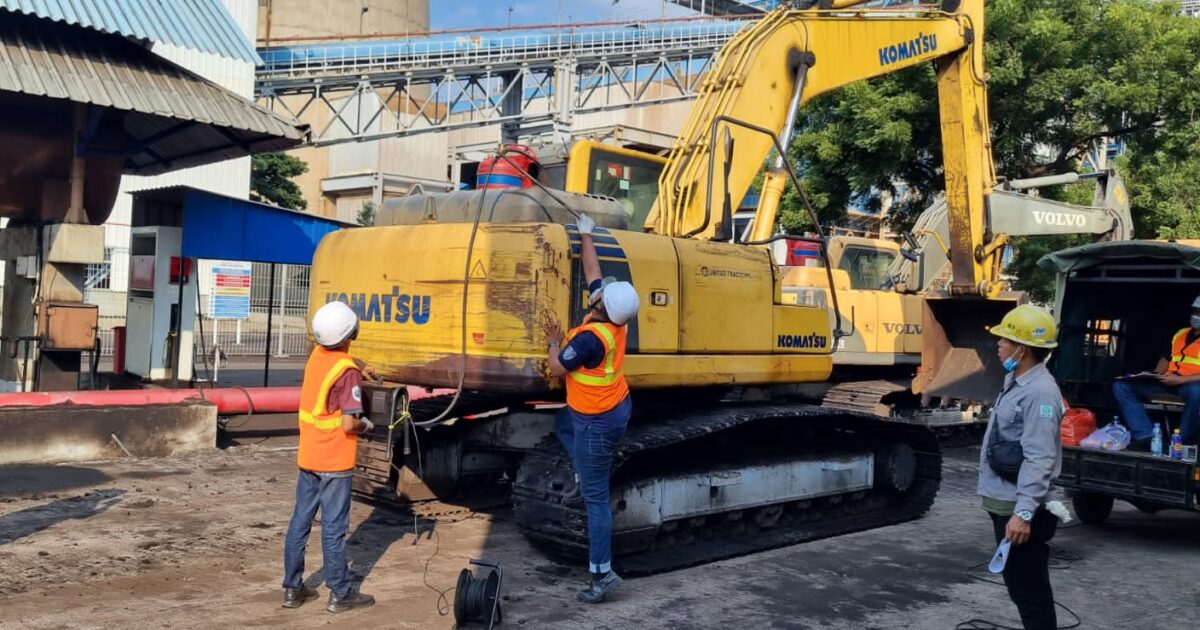
The first step in treatment Excavator heavy equipment or another type is a thorough visual inspection. Walk around the unit and look for signs of oil leaks, coolant seepage, or loose bolts. Based on our experience in the field, Many big problems start from small drops beneath the engine that are often overlooked.
Also check the condition of the main structure such as the boom, arm, and bucket to look for cracks (crack) on welding. If you manage heavy equipment for pavement such as rollers or graders, make sure there is no material caught in the moving parts. This visual inspection is the main foundation in articles about heavy equipment that emphasize work safety.
2. Checking Engine Oil and Coolant Levels (Coolant)
Never start the engine before ensuring the fluid level is within safe limits. Use the dipstick to check the engine oil, make sure the color is still clear and the volume is sufficient. Apart from engine oil, Also check the hydraulic oil and transmission oil levels. Lack of oil can cause excessive friction which triggers extreme heat (overheat).
Besides that, check the coolant reservoir tube (coolant). Never open the radiator cap while the engine is still hot. Ensuring the cooling system functions optimally is very important in heavy equipment maintenance to prevent cylinder head damage. If you are used to handling medical devices for treatments that require high precision, You will understand that cleanliness and accuracy of fluid levels in heavy equipment also require similar precision.
3. Check the Condition of the Air Filter and Fuel Separator
Dust is the main enemy of heavy equipment machines, especially in dry project locations. Check the dust indicator on the air filter. If the indicator shows red, immediately clean or replace the filter element. A clogged air filter will result in wasteful fuel consumption and sluggish engine power.
Furthermore, check water separator on the fuel system. Remove any water accumulated in the separator to prevent corrosion of the injection system. The quality of fuel in Indonesia sometimes has high water content, so this step cannot be missed in the periodic maintenance procedure of heavy equipment.
Read Also : Tips for Caring for/Maintenance of Heavy Equipment to Make It Durable and Optimal
4. Inspection of Undercarriage Components or Tire Pressure
For crawler units such as excavators, check the tightness of the track (track tension). Tracks that are too tight will accelerate wear on the bushings and sprockets, while tracks that are too loose can cause the unit to fall off track (off-track). Clean off any remaining mud stuck to the roller so it doesn't freeze and damage the seal (seal).
If the unit uses wheels (wheel-mounted), check tire pressure using an accurate gauge. Make sure there are no cuts or sharp objects stuck in the tire. Maintaining the condition of these legs is very crucial in heavy equipment management and maintenance techniques because the cost of replacing the undercarriage can reach 30-40% of the total machine maintenance costs.
5. Providing Lubricant (Greasing) at the Points of Articulation
Metal-to-metal friction in the pins and bushings can cause premature wear if not properly lubricated. Do greasing at all points of articulation, especially on actively moving parts such as bucket links and boom joints. Use grease gun and make sure the old dirty lubricant that comes out is replaced by new, clean lubricant.
Providing daily lubricant is often considered trivial, even though it is very effective in maintaining the agility of unit movement. In calculating heavy equipment rental, Units that are maintained with routine greasing tend to have more stable performance and rarely experience technical problems in the field.
6. Instrument Panel and Security System Function Testing
After the physical check is complete, climb into the cab and start the engine (start-up). Pay attention to the instrument panel; make sure there are no warning lights (warning lights) which is lit. Check the function of all control levers, braking system, work light, horn, and reverse alarm.
Security system is a top priority. Make sure the seat belt is working and the rear view mirror is in the correct position. This test ensures that operators can work calmly without worrying about control system failure in the middle of operation.
7. Unit Cleaning and Daily Operation Report Completion
The final step is to keep the operator's cabin and work environment clean. A clean cab improves operator focus and comfort. After it finishes, Don't forget to fill in the logbook or heavy equipment usage minutes and daily reports.
Note working hours (hour meter), total fuel consumption, as well as minor findings during the examination. This documentation is very useful when you need to calculate the number of maintenance days or when planning a future major service schedule. Accurate data makes it easier for management to calculate treatment days effectively.
Special Tips for Excavator Heavy Equipment Maintenance to Keep It in Top Shape
Especially for excavator heavy equipment maintenance, Extra attention should be paid to the hydraulic system. Make sure the hydraulic cylinder does not have scratches or seal leaks. Always position the unit in condition “parking pose” (boom and arm lowered, bucket bends) when checking the hydraulic oil so that the level reading is on sight glass exactly.
Besides that, pay attention to cleanliness swing circle. This area is often a place for dirt to accumulate which can damage the motorbike's swing gear. By maintaining cleanliness and lubrication in this area, You can avoid large costs for heavy equipment repair services in the rotating system.
Comparison of Daily Maintenance vs Periodic Heavy Equipment Maintenance
Often people are confused about the difference between daily checks and periodic servicing. Daily maintenance (Daily Maintenance) is preventive and is carried out by operators every day before work. The focus is on visual inspection and fluid levels.
Meanwhile, regular maintenance of heavy equipment is usually carried out by expert mechanics at certain working hour intervals (for example every 250, 500, or 1000 jam). Regular maintenance involves a complete oil change, replacement of filters, as well as system calibration. Both must go hand in hand; without good daily care, Regular maintenance alone will not be enough to maintain engine reliability.
Estimated Heavy Equipment Maintenance Costs and How to Optimize Them
How much does heavy equipment maintenance actually cost?? The cost varies depending on the type of unit and workload. In general, Routine maintenance costs range between 2% until 5% of the equipment investment value per year. However, this number can increase if you often neglect daily procedures.
To optimize costs, use original or high quality spare parts. Although they are a little more expensive up front, its durability is much better than cheap spare parts that break quickly. Besides that, Discipline in calculating the number of days of treatment will prevent chain damage which is much more expensive. This efficiency will have a positive impact on heavy equipment rental calculations so that your business becomes more competitive.
Need heavy equipment that is well maintained and ready to work for your project? PT Perkasa Sarana Utama is the solution!
Carrying out daily maintenance of heavy equipment in a disciplined manner is very important. However, for many construction projects, managing care, technician, and unit readiness independently is often a challenge in itself, especially when the project is running on a tight time target.
As a solution, PT Perkasa Sarana Utama (PSU) present to provide heavy equipment rental services with well-maintained units, ready for operation, and has gone through daily inspections (P2H) routine. Each unit is supported by regular maintenance according to technical standards, so that the risk of downtime in the middle of a project can be minimized.
With the support of a reliable fleet and experienced team, PSUs help ensure work in the field runs more safely, efficient, and on time. Come contact us here!
- WhatsApp: 0812-5233-3349
- Email: rent@psualatberat.com
- Website: psualatberat.com